Health and Medicine
 PUBLISHED



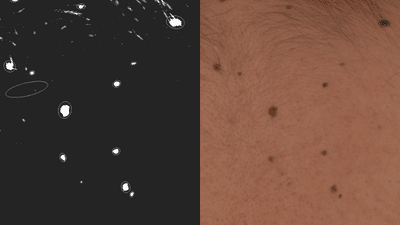


Connecting different science fields often leads to intriguing and exciting new results – for example, when software developed for one discipline is brought into another. One exciting example is the team at MoleGazer, who are employing astronomical tools to identify skin cancer early.
Usually, patients considered high-risk have their full body photographed and inspected by a dermatologist for indications that existing moles might have changed, now turning into melanoma.
However, this approach is time-consuming and requires highly qualified doctors to go through every single mole of a patient, plus a degree of self-diagnosis from the patients that need to keep an eye on their moles.
Software that can be used to quickly analyze patient moles would be very helpful. Fortunately, something that can do that already exists – only, it’s in the astronomy department. Astronomers routinely look for objects in a map of the sky, which are then identified and their evolution tracked.
Thus the MoleGazer project was born: A collaboration between the University of Southampton and Oxford University Hospital, where a patient’s skin is treated like the background sky of an astronomical image, and the moles are the stars. The software finds these “stars” and can see changes over time to alert to possible danger.
"The opportunity to apply techniques I'm already very familiar with to problems outside of astronomy is unique and exciting. Astronomers have been developing powerful tools for a long time. Finding ways we can use those tools elsewhere is important and a great example of collaboration between scientific disciplines," Dr Meredith Morrell, a research fellow at the University of Southampton who presented the work at the National Astronomy Meeting last week, said in a statement.
The team created an evolutionary history of many moles for several patients, helping dermatologists diagnose at-risk moles. The researchers would like to go even further and create a map of how benign moles turn into melanoma to assist in the earliest possible diagnoses, as early identification is key to better outcomes.