Nature
 PUBLISHED

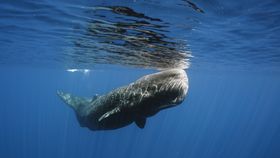


A young, male sperm whale washed ashore on the Murcian coast in southern Spain at the end of February. Now, an autopsy has revealed the unlucky animal died from gastric shock after swallowing 29 kilograms (64 pounds) of plastic debris.
Human junk including pieces of ropes, nets, plastic bags, raffia sacks, and a plastic jerry can were found in the whale's stomach and intestines, regional authorities announced on Friday.
Experts at the El Valle Wildlife Rescue Centre believe the 10-meter (33 feet), 6-tonne (6.6 tons) giant died after developing an inflammation of the inner walls of the abdomen (peritonitis), usually triggered by a bacterial or fungal infection. This, they say, was likely the result of the massive amounts of undigested plastic in its body.
It is not the first time a whale has died from ingesting our discarded plastic. Tragically, this is a situation that is becoming more and more common. In 2016, a pod of 13 sperm whales washed ashore with plastic garbage in their bellies, including a 13-meter (43-foot) long fisherman’s net and a 70-centimeter (28-inch) long sheet of plastic from a car. Last year, another whale had to be put down after it was found with 30 plastic bags in its stomach.
And we can expect the problem to get worse. Today, there are some 5.2 trillion tonnes (5.7 trillion tons) of plastic floating around in the world’s oceans, including far-out regions like the Arctic and the deep sea. By 2025, this already staggering figure could triple. By 2050, plastic waste could actually outweigh fish.
The good news is that the world is beginning to take notice, though it may not be acting fast enough. The EU recently launched a strategy to tackle plastic waste, aiming to have all plastic reusable or recyclable by 2030. The UN has also committed to ending plastic pollution but has not yet set any timetables or made anything legally binding, mostly thanks to the US' refusal to support any stronger measures.
As for the sperm whale in Murcia, the regional government there has launched a campaign to protect marine life from plastic pollution and prevent the oceans from being yet another human dumping ground any more than it already is.
Director-general for the natural environment in the Murcian government, Consuelo Rosauro, told The Telegraph, “Many animals get trapped in the rubbish or ingest great quantities of plastic which end up causing their death."
Plastic waste is currently the biggest threat currently affecting marine life, she added.