Space and Physics
 PUBLISHED
 3
3


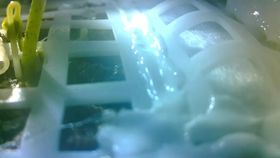


Just yesterday, the world was blown away to hear news about China sprouting a cotton plant onboard the Chang'e-4 lander on the far side of the Moon – marking the very first time any organic matter has been grown on our satellite.
However, brace yourself for some bad news. It’s with great sadness we can confirm that Moon sprout is no more. RIP.
The Chang'e 4 probe entered "sleep mode" on Sunday in anticipation of the first lunar night since the probe touched down on the surface on January 2 (a lunar day lasts 29.5 Earth days). A lunar night lasts roughly 13.5 days. The temperature can plummet drastically during this time, dropping to around -180°C (-292°F), as the Moon’s lack of atmosphere means it’s unable to trap heat or insulate the surface. Unfortunately, the night proved too tough for the little cotton sprout.
By the sounds of things, this was anticipated by the researchers on the project.
"Life in the canister would not survive the lunar night," chief scientist of the experiment Professor Xie Gengxin of Chongqing University told Xinhua Chinese state media.
The cottonseed was grown inside a sealed canister onboard Chang'e-4 with a number of other companion seeds: rapeseed, potato, and Arabidopsis flowers (and yeast and fruit fly eggs), as well as ingredients for life: air, soil, and water.
Cameras inside the cannister showed that a cotton seedling had started growing, however, it appears that the seeds and eggs did not. Xie went on to explain that the biosphere experiment has now ended, so the chances of any other seeds or eggs coming to life are zero.
The China National Space Administration also confirmed that the organic material will now gradually decompose in the air-tight canister and it will not contaminate the outside environment.
RIP, Moon sprout. You did us proud.