Space and Physics
 PUBLISHED
 3
3


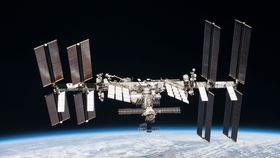


Russian News websites report that cosmonauts have discovered the location of three microcracks in the Russian module of the International Space Station (ISS). The cracks are located in the transfer chamber of the Zvezda module, a location that has had its share of issues related to cracks and oxygen supply.
None of these are concerning, and the astronauts are in no danger. The possible cracks have been sealed and it appears that in the near future, the transfer chamber will be checked to make sure that the leaks have been eliminated. These sealing works are reported by the RIA Novosti news agency and come about a month since Russian space agency Roscomos announced the sealing of a possibly related micro-fissure in the same part of the module.
The current drop in pressure due to the leak is about 0.4 millimeters of mercury per day. That’s almost 1,500 times smaller than the emergency threshold for a leak which is estimated at 0.5 millimeters of mercury per minute.
The ISS is showing its age. For over 20 years, it has been continuously inhabited – with some modules having lived beyond their planned operational time. Guaranteed support of various nations for the ISS will last until 2024, and stakeholders are currently deciding what the future will look like for the ISS beyond then.
[H/T: RIA Novosti news agency]