Space and Physics
 PUBLISHED


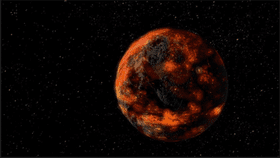


The Moon is believed to have formed when a Mars-sized object hit the young Earth billions of years ago. The exact mode and timing are still a matter of speculation but there is a general consensus that it happened around 4.51 billion years ago, roughly 140 million years after the birth of the Solar System.
A team of German researchers has now put forward a revised timeline. According to their calculations, the Moon is slightly younger, roughly 4.425 billion years old, plus or minus 25 million years, making it 85 million years younger than we thought. Their study is published in Science Advances.
A major issue in dating the Moon is that none of the rocks found there by the six Apollo missions and the three Soviet robots are old enough. For a long time, the Moon was covered by a magma ocean, up to 1,000 kilometers (621 miles) in depth. Understanding how long this magma ocean survived is a key step in working out the age of our natural satellite.
“The results from the model show that the Moon’s magma ocean was long-lived and took almost 200 million years to completely solidify into mantle rock,” lead author Maxime Maurice from the German Aerospace Center (DLR) said in a statement.
“The time scale is much longer than calculated in previous studies,” added DLR colleague Nicola Tosi. “Older models gave a solidification period of only 35 million years.”
If their model is correct, rocks across the surface of the Moon must have solidified at different points, which would lead to rocks having slightly different compositions. The team was able to produce a model for the rock composition and their ages. The next step was to compare them to the actual lunar rocks, and that’s where the revision to the age of the Moon came about.
“By comparing the measured composition of the Moon’s rocks with the predicted composition of the magma ocean from our model, we were able to trace the evolution of the ocean back to its starting point, the time at which the Moon was formed,” explained co-author Sabrina Schwinger also from DLR.
Interestingly, the formation of the Moon as dated in this study coincides with the formation of the Earth’s core estimated with the uranium-lead method. If this is the case, the Moon formed at the very end of the formation of our planet.