Space and Physics
 PUBLISHED


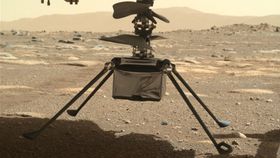


The inaugural flight of NASA’s Ingenuity is hopefully just less than two weeks away and the small Martian is now ready to be released from the belly of Perseverance. The helicopter will soon be separated and softly touch the ground.
Ingenuity has survived a journey of millions of kilometers and now the focus is on the last 13 centimeters (5 inches). This is how far it is from the ground after the super cool mechanisms moved it from its horizontal configuration to its vertical one, with the legs stretched out to be dropped. And after that, the NASA rover will have to quickly move away because Ingenuity has limited battery power so need precious sun-rays to remain charged.

The mission team is aiming for April 11 for this ground-breaking launch. If this technology demonstration achieves lift it will be the first propelled flight on another planet. This could lead to a completely new way to explore the planets and moons of the Solar systems.
Over the next week, the team will make sure the helicopter is fully charged and test all its systems including the low-speed and high-speed settings of the rotors. If the first flight is successful, four subsequent flights of about 90-second each is expected to be attempted over the 30-martian-day-long mission.