Space and Physics
 PUBLISHED
 4
4


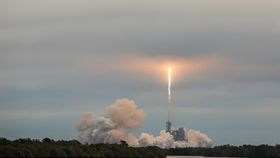


On April 29, China launched the first module for its planned Tiangong space station and the core made it into orbit successfully.
However, the rocket that took it up there was not so fortunate – a large part of the Long March 5B rocket is now in failing orbit and could make an uncontrolled reentry back to Earth to land at an unknown location.
Non-reusable rocket stages typically detach and return to Earth before reaching orbit through a specific route, with touchdown occurring at designated areas (often at sea). Should rocket stages reach orbit, they often perform a maneuver called deorbit burn that pushes the stage back into the atmosphere.
The large core of Long March 5B entered lower orbit, but has since fallen 80 kilometers (50 miles) towards Earth. There is now concern that the stage could survive reentry and land on an inhabited area, much like debris from a previous Long March 5B rocket that damaged a village on Cote d'Ivoire in May last year.
“Last time they launched a Long March 5B rocket they ended up with big long rods of metal flying through the sky and damaging several buildings in the Ivory Coast,” said Jonathan McDowell, Astrophysicist for Harvard University and popular space commentator on Twitter, reports the Guardian.
“Most of it burned up, but there were these enormous pieces of metal that hit the ground. We are very lucky no one was hurt.”
However, McDowell notes that this is not some potentially cataclysmic event, and although there is danger dependent on where it lands, the stage is not in the same league as a meteorite.
“So we're not talking a major mass casualty event here, but some chance of property damage and a smaller chance that one or a few people might be hurt," he said. "Or, more likely, the debris lands in the ocean and no problem. We'll see, and I am watching closely.”
Although there's been no official announcement from the China National Space Administration about planned maneuvers, the South China Morning Post reports Chinese authorities are tracking the projectile and predict most of it will burn up in reentry and that which doesn't will fall in international waters.
The most likely scenario is that the debris lands in the sea, harmlessly touching down without damage to surrounding areas. According to Space.com, the odds of an individual being hit by a piece of falling space debris is one in a trillion. Within the next few days, scientists will be able to ascertain just how close the debris is to falling, but as of now, not much information has been given.
China has planned 11 launches by the end of 2022, which will slowly piece together its new space station. All of these will likely utilize the same Long March 5B rocket, which has now had two failed core reentries, so there is speculation about how the issue will be addressed.