Space and Physics
 PUBLISHED


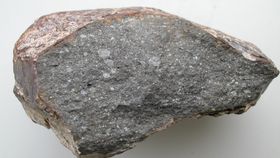


The origins of Earth's water have been a long-standing mystery, debated at least as far back as Newton. A study of a type of meteorite known as an enstatite chondrite has shifted the case in favor of those who think the Earth's water was here from formation, or close to it, rather than arriving later from the outer Solar System.
The early Earth was very hot, and it was millions of years before it cooled enough for liquid water to exist. Knowing this, some planetary scientists have proposed that any H2O on the forming planet would have boiled off into space. The Earth then would have been a desert until comets, or asteroids from beyond the snow line, provided enough material to fill our vast oceans.
Dr Laurette Piani of the Centre de Recherches Petrographiques et Geochimiques has concluded that this cometary explanation is unnecessary. Piani was part of a team that studied the chemical composition of 13 enstatite chondrites, a type of meteorite made of inner solar system material, as similar as we are likely to find to the initial composition of the Earth.
Piani and colleagues report in Science that these chondrites have hydrogen sufficient to make up 0.08-0.54 of their weight in water. Since we know there was plenty of oxygen in the early Earth, that suggests water was possible. The percentages may sound small, but the authors calculate it means the early Earth could have had enough water to fill the current ocean basins three times over.
"Hydrogen-bearing material was present in the inner solar system at the time of the rocky planet formation, even though the temperatures were too high for water to condense," Piani said in a statement.
Given how much effort goes into finding and studying meteorites, we might have expected the hydrogen composition of enstatite chondrites to have been noticed long before. However, they only account for 2 percent of known meteorites, so opportunities to study them are scarce. Even those that do exist have often experienced interactions that make them less reliable indicators of the Earth's original composition.
Carbonaceous chondrites are much more common, but have isotopic ratios less similar to the Earth's and are thought to have formed beyond Jupiter.

When water was previously observed in enstatite chondrites, it was attributed to interactions with Earth's atmosphere, which is an explanation the paper rejects based on the isotopic analysis.
"If enstatite chondrites were effectively the building blocks of our planet – as strongly suggested by their similar isotopic compositions – this result implies that these types of chondrites supplied enough water to Earth to explain the origin of Earth's water, which is amazing!" said co-author Dr Lionel Vacher, now at Washington University.
Piani and Vacher think these meteorites, given their nitrogen component, can explain the air as well as the sea.