Space and Physics
 PUBLISHED
 1
1




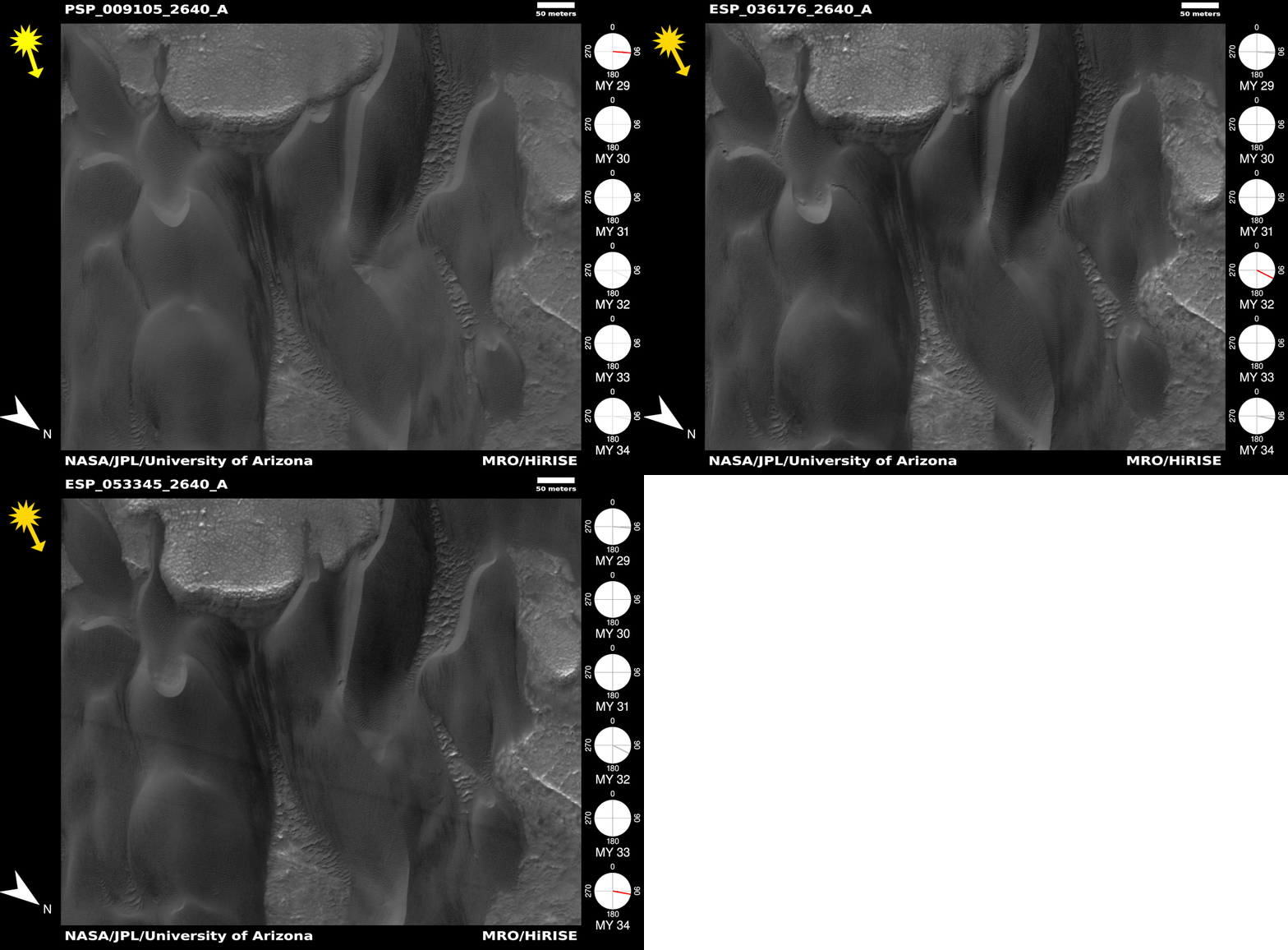
Most of the observations we have from the surface of Mars are stills, so it is common to consider the Red Planet somehow frozen in time. But Mars is a changing world and this is better shown by these incredible repeat observations from NASA's Mars Reconnaissance Orbiter (MRO).
Using the High-Resolution Imaging Experiment or HiRise Camera onboard the MRO, planetary scientists have tracked the motion of dunes across the surface of Mars. The aim is to understand what the most important factors are in their motion, and in particular, how much local and regional conditions impact them.

In a paper published in the journal Geology, American researchers have seen that the highest sand fluxes are observed in the northern polar region, helped along by winds produced by the retreating dry ice polar caps. Regions near impact basins, such as Hellas and Isidis Planitia, also experience these significant streams of sand. The southern regions above 45 degrees latitude south were less mobile, which the researchers blame on seasonal frost and ice trapping the sand.
“We quantified bed-form sand fluxes across Mars, finding that the largest fluxes are driven by boundary conditions distinct from those on Earth,” the researchers wrote in the paper. “The locations of Syrtis Major, Hellespontus Montes, and the north polar erg are all near prominent topographic boundaries (e.g., impact basins, the polar cap), which also have strong thermal gradients that likely contribute to seasonal winds and, in turn, high sand mobility.”
These gifs show the motion of the dunes in incredible detail.