Space and Physics
 PUBLISHED
 2
2


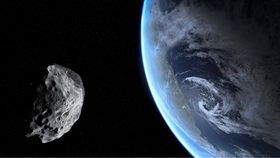


There are a lot of space rocks out there and we know very little about them. Most of them remain completely unknown to us, others get discovered only when they get too close to our planet. This is the case of asteroid 2019 SP3 which is flying over our heads today, October 3.
The celestial body is roughly the size of a building, between 15 and 33 meters (49 to 108 feet) in diameter. SP3's orbit is taking it slightly closer than the Moon is to Earth, roughly 370,000 kilometers (230,000 miles) from the planet surface, according to NASA’s data.
While this is certainly a “close approach” in cosmic terms, there’s nothing to worry about. The rock will continue in its orbit around the Sun undisturbed. It moves with a speed of 8.53 kilometers (5.3 miles) per second and does a full orbit in 1,416 days, almost four years.
While this object specifically poses no threat to us, it is a reminder of the potential risk we face from the heavens. The asteroid was only discovered on September 22. Other asteroids have discovered just hours before they flew by, and others have just hit us.
To get an idea of what would happen if 2019 SP3 were to hit our planet we can look to the Chelyabinsk event that occurred in 2013 when a meteor roughly the same size exploded over the Russian town. The asteroid burned up in the atmosphere creating a bright flash of light and releasing enough energy that a sonic boom shattered windows for 518 square kilometers (200 square miles), with over 7,200 damaged buildings and a collapsed factory roof. Over 1,600 non-direct injuries occurred, mainly due to flying glass.

There are roughly 20,000 known near-Earth Asteroids divided into four families depending on their orbital parameters. About 10 percent of these are considered Potentially Hazardous Asteroids, or PHAs. Space agencies such as NASA and ESA are keeping an eye on the all and observatories and amateurs worldwide often serendipitously spot new ones.
The agencies also run "Asteroid Impact Simulation" exercises to plan and prepare for an asteroid impact. They win some, and lose some. The last one held earlier this year saw New York accidentally destroyed to save its projected target of Denver, highlighting the challenges we are likely to witness both before, during, and after the event if such a threat was discovered.