Space and Physics
 PUBLISHED



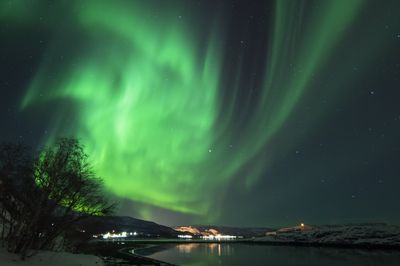


Just three years ago, researchers discovered a new geomagnetic phenomenon. Dubbed "space hurricanes", scientists saw huge swirling arms of plasma in the Earth’s magnetosphere hundreds of kilometers long around a calm "eye of the storm", just like in a regular hurricane. These events can disrupt satellites in low-Earth orbit and even cause aurorae closer to the ground – and they occur more often than thought.
Initially, the discovery was exclusive to the Northern Hemisphere, likely due to more people living near or within the polar region in the North compared to the South. More people means more scientific instruments and observations. However, now scientists have quantified and qualified what space hurricanes are like in the Southern Hemisphere.
It appears there aren't any major differences between the two hemispheres. Between 2005 and 2016, there were 329 space hurricanes in the Northern Hemisphere and 259 in the Southern Hemisphere. Space hurricanes are more likely to occur in the dayside polar cap at a magnetic latitude greater than 80°, very close to the magnetic poles. They are strongly dependent on the interplanetary magnetic field, the solar cycle, and even the Earth's seasons.
Space hurricanes are more likely to occur in summer and during the daytime, suggesting that sunlight exposure and magnetic tilt both play a role in the hurricanes. Unfortunately, their high latitude and daytime occurrence make it unlikely they can be witnessed by human eyes.
The team estimates the average velocity for the plasma in space hurricanes is 1 kilometer per second (2,237 miles per hour). That sounds pretty fast already, but it is about 10 times faster than the average plasma found around the polar regions.
Understanding these events is important as they might play a big role in space weather. The work helps create a three-dimensional picture of these magnetic vortices and how they affect the lower atmosphere. The goal is to be able eventually to be able to predict these hurricanes and be ready to mitigate some of their effects.
The study is published in the Journal of Geophysical Research: Space Physics.