Health and Medicine
 PUBLISHED
 1
1



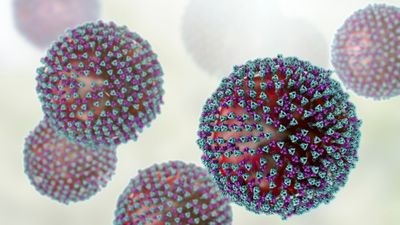


An ongoing measles outbreak in South Carolina has just smashed the record for the largest in the United States since the disease was declared eliminated at the turn of the century. In total, 789 cases have been reported at time of writing, pushing this outbreak beyond the massive West Texas outbreak that peaked at 762 cases in 2025.
During 2025, overall measles cases surpassed 1,500 for the whole of the US for the first time since 2000, when the disease was officially declared eliminated. By the end of the year, federal figures counted a total of 2,255 confirmed cases across 45 jurisdictions. It follows a global trend towards increasing resurgences of the disease in recent years.
The South Carolina outbreak – reportedly the worst in the state for over 30 years – is centered around Spartanburg County, according to the South Carolina Department of Public Health. While most of the spread appears to be between close contacts of cases, officials warned that “the number of public exposure sites indicates that measles is circulating in the community increasing the risk of exposure and the risk of infection for those who are not immune due to vaccination or natural infection”.
In 2025, 93 percent of officially logged measles cases occurred in unvaccinated people, or those whose vaccination status was unknown. Of the 243 who were hospitalized, the largest proportion (18 percent) were children aged under 5. There were three recorded deaths.
Recent research mapped coverage of the MMR vaccine – which protects against measles, mumps, and rubella, and is sometimes also combined with the vaccination against chickenpox – across the US. The scientists behind the study identified pockets of undervaccination, leaving populations vulnerable to large outbreaks of disease such as this.
One driving factor is mistrust of the vaccine due to misinformation from the vocal antivaccine lobby. We know vaccines don't cause autism – but fears initially whipped up in the late 90s by a now retracted paper have proved hard to dispel.
Unfortunately, even officials at the highest levels of the US government have been responsible for propagating misinformation about vaccines recently, including Health and Human Services Secretary Robert F. Kennedy, Jr.
Scientists and medical experts are taking steps to counter this with evidence-based advice, but there are considerable gaps to plug, as the mapping study demonstrates.
It’s vital that as many people as possible get vaccinated to help protect those who are most vulnerable, such as babies too young to get vaccinated, those with compromised immune systems, and those with health conditions that prevent them receiving vaccines.
Of the 789 cases in South Carolina, more than 600 have occurred just this year. In a media briefing on January 21, State Epidemiologist Dr Linda Bell explained that, at that time, 538 people were also in quarantine and 33 in isolation. For some of them, that status won't lift until February 10.
CNN reports that cases in North Carolina, Washington, and California have also been linked to the South Carolina outbreak.
There’s currently much speculation around whether the US is about to lose its measles elimination status, as has happened to Canada, the UK, and a number of European countries. For a disease to be declared “re-emerged”, there has to be evidence of sustained transmission chains for a continuous period of 12 months.
A determination will be made after a meeting of the Pan American Health Organization scheduled for April 13, at which the US and Mexico have been invited to present their data.