


 Health and Medicine
 PUBLISHED


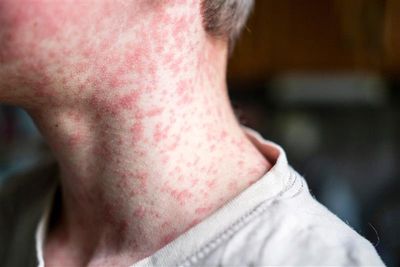


Although it may sound like hyperbole, measles cases really have surged across the world in the last few years. According to the World Health Organization (WHO), around 10.3 million cases were reported in 2023, which represents a 20 percent increase since 2022. The organization has said that this rapid and widespread rise is due to a lack of immunization coverage.
Measles is a highly contagious viral infection that is spread through the air when an infected person coughs or sneezes. Generally speaking, the infection presents with a high fever, a cough, a runny nose, red, watery eyes, and a characteristic rash. According to the American Centers for Disease Control and Prevention (CDC), although many people regard it as a mild illness, the disease can cause serious health complications.
Children and infants are at the greatest risk of developing serious complications, which can include blindness, pneumonia, and encephalitis – inflammation of the brain that causes it to swell, which can be life-threatening. Even when people survive measles, they can be left with serious health effects that can last throughout their lives.
Despite its severity, the world has been armed with an effective vaccine for decades. Just two doses of the measles, mumps, and rubella (MMR) vaccine is enough to provide long-lasting protection against all strains of the disease.
This vaccine for measles was first developed in the 1950s and, by 1961, was hailed for being 100 percent effective. It was rolled out for public use in 1963. Over the next decade, countries introduced mass vaccination programs against the disease, and then the first internationally focused effort began in Africa in 1966. By the 1970s, a new version of the vaccine was created and it was later combined with those for mumps and rubella to form the MMR vaccine.
Across the world, the widespread vaccination of children against measles has dramatically decreased its transmission. Between 2000 and 2023, the vaccine prevented over 60 million deaths across the world.
But despite this progress, measles cases are now on the rise again due to gaps in immunization coverage.
In 2023, the new WHO report states, around 22 million children missed their first dose of the measles vaccine. It also estimates that, across the world, 83 percent of children had their first dose, but only 74 percent received the recommended second dose.
Due to its ability to spread quickly, measles requires a 95 percent or higher coverage of both doses in all countries and within every community in order to prevent outbreaks from surging.
“Measles vaccine has saved more lives than any other vaccine in the past 50 years,” Dr Tedros Adhanom Ghebreyesus, WHO Director-General, has said in a statement. “To save even more lives and stop this deadly virus from harming the most vulnerable, we must invest in immunization for every person, no matter where they live.”
“The number of measles infections are rising around the globe, endangering lives and health,” CDC Director Mandy Cohen added. “The measles vaccine is our best protection against the virus, and we must continue to invest in efforts to increase access.”
A preventable cost
Due to the global gaps in vaccination coverage, 57 countries experienced significant measles outbreaks in 2023. They affected every region across the world, except the Americas, and represented a nearly 60 percent increase from 36 countries in 2022. Although the Eastern Mediterranean, Europe, Southeast Asia, and Western Pacific regions experienced significant upsurges in cases, the African region had the largest and most disruptive outbreaks.
The recent upsurges in cases resulted in around 107,500 people – mostly children under the age of five – being killed by the disease last year. Though this represents an 8 percent decrease from the previous year, it is still too high a number for a preventable disease.
At the same time, the slight dip in the number of deaths is also because cases have surged in countries and regions where children with measles have better overall nutrition and health, so they are surviving despite the infection.
The global increase in cases also threatens the world’s elimination goal, which is part of the Immunization Agenda 2030. Up to the end of 2023, 82 countries had achieved or maintained measles elimination, while Brazil was reverified as having eliminated the disease this month. This means the Americas region is once again free of endemic measles – but this situation can change very quickly if there are gaps in the immunization process.
WHO is urging countries to ensure that children continue to receive both doses of the vaccine and to strengthen their disease surveillance as well. Without these steps, a disease that has plagued humanity throughout history will be allowed to spread again.
The report can be accessed here.



 2
2