Culture and Society
 PUBLISHED


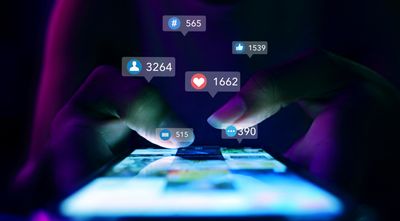


Is the age of social media coming to an end? For several years, platforms like Facebook and X (formerly Twitter) have been in decline. Not only have their business models been under increasing strain, but their once loyal users are abandoning their services in greater numbers. In an effort to address the mutating landscape, the major players in this trillion-dollar industry have turned their platforms into algorithm-driven hubs filled with AI-generated content and bots.
Users are behaving differently, too. Whereas they used to share personal content in a free-for-all digital space, people are now mostly passive consumers scrolling feeds curated by machines. And years of ethical controversies, such as worries about mass surveillance, systematic political manipulation, and the impacts social media’s worst toxic elements have on mental health, have led many to look for smaller, intimate digital spaces to escape to.
At first glance, it really does look like social media is dying, but this may not actually be the case at all. Instead, what we are likely witnessing is a paradigm shift that has been occurring quietly for several years. So instead of thinking social media is ending, perhaps it is better to ask what comes next?
How the “Golden Age” came to an end
When you think about social media, your mind probably goes to large platforms like Facebook, Instagram and the thing Twitter has become. But technically, social media is much older than this, dating back to specific internet developments during the 1980s and especially the 1990s when computers became more common. The introduction of online communication services like CompuServe, America Online, and Prodigy brought new ways for digital communication to occur through emails, bulletin board messages, and even real-time chat.
The launch of Friendster in 2002 may represent the start of the modern social networking phenomenon. Within a year, the then Californian website boasted 3 million registered users and was attracting significant investment interest. Then, in 2003, LinkedIn made its first appearance as a more professional social network aimed at connecting the business-minded among us. But the real heavyweight in this early age of social media was MySpace, which launched during the same year. It quickly became a popular networking platform, connecting millions of people across the world. By 2006, MySpace was the most visited website in the US, and the second or third most visited across the world (Google and Yahoo being the top two).
And then came Facebook. By 2008, Facebook had eclipsed MySpace and would go on to dominate the industry. What made Facebook so appealing was its ability to bring disparate people together in a community-like space where they could share photos, videos, and ideas. It was a kind of digital scrapbook which, through its news feed mechanism (introduced in 2006), felt alive, personal, and authentic. At the same time, its “Like” feature offered a new way to engage with other people and to validate content.
If Facebook offered a space to connect with people they already knew, Twitter expanded a person’s networking reach across the planet. Its global “pub” feel allowed someone to interact with a friend down the road one minute, and then an A-list celebrity in another country in the next. Its fast-paced, short-form content also made it the go-to source for breaking news stories while also providing access to unfiltered views from anyone using it.
This was the Golden Age of social media. At its core, these platforms provided opportunities for authentic connections in community-focused spaces with minimal interference from advertisements, political polarization, or interfering algorithms. It was also a veritable nest egg for the social sciences.
Social media supercharged these disciplines by offering unprecedented access to massive real-time datasets that showed human behavior in action. No longer were researchers tied to surveys or small-scale focus groups; they now had access to longitudinal records for mapping human interactions, social networks, and reactions to cultural trends at a never-before-seen scale.
But, as with all things, this paradigm was not to last. In fact, there was tension in the model as early as 2008 when conflicts over privacy, data ownership, and user exposure started to nibble away at the utopian vision. Over the next decade, platforms transitioned from user-created posts to increasingly algorithm-optimized feeds filled with performative content. As fewer people posted their own creations, these algorithms pushed more material from influencers and brands. E-commerce and forced advertising also began to clutter the once well-curated interfaces.
Algorithms have become a focus for much of the disdain in the story of the rise and fall of social media. According to this narrative, the algorithms began to prioritize divisive content specifically designed to irritate people. Angry people, the argument goes, are more likely to click, comment on, or share content that upsets them.
Increasing concerns over privacy and toxic comments also encouraged users to post less of their own content, helping to transform them from creators into passive viewers. This new inactive state was compounded further by the arrival of apps like TikTok and Snapchat that focused on short-form videos that appeared through algorithm suggestions.
Now Facebook, Instagram, and X find themselves on the back foot as platforms like TikTok, Twitch, and YouTube rise to the top in the competition for attention. Beset by these challenges, these “traditional” social media platforms are laying off staff in their thousands while also moving towards paywalls and subscription models. Meta – the owners of Facebook, Instagram, WhatsApp and Threads – has strayed so far from its original purpose that, as of 2021, it no longer refers to itself as a social media company.
So the end of “traditional” social media has already happened. The industry has moved on, and, in many ways, the problem we have now is really one of society trying to catch up with this fact. The question is what caused these transitions and, more importantly, what will follow?
The problems of society
Dr Petter Törnberg, an Assistant Professor in Computational Social Science at the University of Amsterdam, has spent many years studying the processes and forces that have shaped social media to this point. He’s not only interested in the roles these platforms play in our society, but also in how they became laden with the negative features many users lament: deeply polarized spaces where attention is increasingly dominated by small groups of influential figures with divisive views.
The rise in importance of attention as a form of capital, as a kind of central commodity in society, is no longer being governed through editors or national institutions. This creates pressure for more sensationalist and conflicting forms of politics.
Dr Petter Törnberg
Over the last few years, Törnberg’s research has shown that many of these issues are not the outcome of the algorithm or human nature per se, but are rather structural problems within social media’s very architecture.
Take the often repeated view that social media platforms are simply echo chambers where people are only exposed to ideas and views they already agree with, resulting in more politically extreme environments. According to Törnberg, this idea is not necessarily representative of what’s going on; these platforms are not actually made up of echo chambers.
This, he argues, highlights a naive perspective we have of how politics works. Take, for instance, the idea that formed the echo chamber interpretation. During the 1990s, a belief about how the ideal public sphere should work became influential across much of the Western world. The idea, originally formulated by the German philosopher and social theorist Jürgen Habermas in the 1960s, was that politics relies on shared, inclusive spaces where people can engage in debate. Here they can test their claims, gather together arguments for or against a perspective, and then act accordingly.
Viewed through this prism, the rise of the internet could be seen as the ideal decentralized communal environment where people can take part in this kind of rational exchange. But in 2001, the legal scholar Cass Sunstein introduced the counterpoint – the echo chamber. He argued that the internet allowed people to practice selective exposure, thereby filtering out unwanted or countervailing views. Fast forward to the 2010s, and the idea of the echo chamber was being used to explain how algorithm-driven social media was creating a more fractured society.
But this may not be the case. “Over time, we’ve come to realize that there’s a couple of problems with this idea," Törnberg explained to IFLScience. "The first one being that it doesn't seem like most platforms consist of echo chambers. We do actually encounter opposite opinions online. In fact, some studies suggest that we encounter more diverse opinions online than we do offline.”
The second problem relates to what we think politics is more generally. In essence, the idea that we simply gather arguments for or against our views and then make decisions based on them is simply not the case. Politics, it seems, is less of a rational decision-making practice and one that is more of a complex interaction between beliefs, identities, and cultural preferences.
In 2022, Törnberg published a study showing that social media actually does expose us to differing views and, if anything, it actually takes away more extreme opinions in order to keep us on the platforms. In doing so, it draws us from our local bubble.
When we deal with issues at a local level, the outcome is generally a stable plural patchwork of different conflicts. But when we’re brought into these kinds of non-local interactions, the media platforms end up driving conflicts along partisan lines, which results in polarization. This creates a “maelstrom” where more and more identities, beliefs, and cultural preferences are drawn into further societal division.
“[Social media has become] this kind of identity-fused, conflict-fused prism through which we see politics. And that is actually what might be fueling polarization – it's more a question of identity and belonging, and less of a question of what kind of arguments and opinions are [expressed],” Törnberg said.
“There are studies showing that people are not disagreeing more. If you plot the distribution of opinions, it's hard to see a clear shift. But what has shifted is how we feel about people from the other political side. It's more hatred, more and more anger, and more people saying they would be upset if their children married someone who voted for the other party.”
These perspectives force us away from technologically deterministic views of how society works. Instead of blaming social media for the world’s ills, we see it as an embedded technology structured and informed by demands and values present in our culture more generally.
“To a certain degree, a lot of the trends we’re observing, in terms of polarization, you can trace back to the '90s, to pre-social media cable television when we saw the rise of nationalisation of politics where local issues became less important. Then you get this kind of politics structured around certain conflicts that become definitional for an entire society, which reduces cross-cutting disagreements,” Törnberg told IFLScience.
In the past, a person could disagree with someone on a more local level on one issue but agree with them on others, which meant they could ultimately remain friendly. However, that is not the case in this current climate.
Looking at the statistics, it seems people are talking to chatbots much more than they are talking to people online.
Dr Petter Törnberg
“Now it has become more that we disagree on every opinion because politics is structured around a single dimension of conflict. [At the same time], the rise in importance of attention as a form of capital, as a kind of central commodity in society, is no longer being governed through editors or national institutions. This creates pressure for more sensationalist and conflicting forms of politics.”
What comes next?
In the face of these large-scale changes, what is the future of “social media”? For Törnberg, there are three likely outcomes ahead of us. The first is that we will see more people moving to private or semi-private group chat features, like WhatsApp or Discord. Even Instagram has introduced a new feature where you can have group chats with your friends.
“There is also the rise of things like Substack,” Törnberg explained, “kind of delineated communities where you’re following someone that you trust and you can maybe interact within that space.”
Because Substack is a paid service, there are more boundaries surrounding its use, so there is less of a risk of the content being invaded by bots. This helps promote trust and produces a different ecosystem to social media that is driven by parasocial relationships.
This is a kind of pivot point where we're transitioning to something new, something different, that we have not yet come even close to understanding what its impacts will be
Dr Petter Törnberg
The second shift relates to a continued emphasis on short-form video content and broadcasting. Platforms like TikTok, Instagram, and even Facebook continue to promote a method whereby users focus on watching videos, as if it were a form of television.
“The final trend that is entangled in all of this is generative AI,” Törnberg said. “It’s just exploded. Looking at the statistics, it seems people are talking to chatbots much more than they are talking to people online.”
But as we have seen already, these outcomes still require us to take them seriously. It may seem like a good idea to ditch your public X profile for a private chat on WhatsApp, but as Törnberg has demonstrated, this is the type of environment that will create actual echo chambers. Whatever comes next in this ever-changing landscape of social technologies, we are not passive. There is an opportunity to restructure these technologies to better serve society.
“I would say just the recognition that we are in the midst of a very fundamental transition of our information environment that is maybe just as fundamental as the rise of the internet and the rise of social media. That this is a kind of pivot point where we're transitioning to something new, something different, that we have not yet come even close to understanding what its impacts will be.”
But how do we positively shape these trajectories? The answer to that remains less clear, but we all have a role to play as the costs affect everyone, regardless of whether you engage with social media or not.