Space and Physics
 PUBLISHED


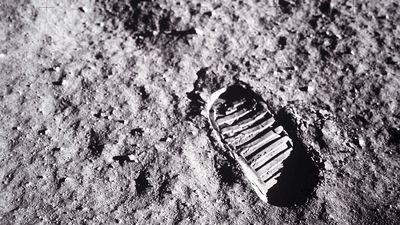


People who want to search the Moon for signs of aliens are, very generally speaking, not scientists. We established quite some time ago that the Moon is a hostile environment to life, and (bar a few tardigrades) is a terrible place to search for it. If someone tells you we should look for aliens there, you probably aren't looking at a science nerd.
But, according to a new study, it may be a good place to search for signs of truly ancient life from around the galaxy. To begin placing constraints on the number of intelligent species that have called the Milky Way their home, all we would need is one cubic meter of lunar regolith.
The search for extraterrestrial intelligence (SETI) is an emerging field, but it has largely focused on looking for exoplanets which may be suitable for life, signals that appear to be artificial, and signs of things like megastructures that advanced civilizations could create around their host stars, should they feel the need.
It is rarely the case that scientists are looking for physical artifacts of intelligent species. There are those who have proposed that aliens may send probes out into the cosmos, and that we should look for them, but little effort has gone into proposing how we should search for such probes. Space is big, and hypothetical probes are small. It makes sense that we should focus on looking for signals and other signs in unreachable regions of the galaxy (which to us non-advanced species is pretty much all of it).
In the new preprint paper, which is under review at the International Journal of Astrobiology, SETI Institute Affiliate Scientist Dr Lewis Pinault led a team suggesting that signs of such advanced species could feasibly be lying there in the lunar regolith, the top layer of loose surface dust, rock and debris that covers the Moon.
The idea is pretty simple, and was proposed by Oleksiy Arkhipov back in the 1990s. In short, as well as macroscopic objects, intelligent species will also leave behind tiny fragments of debris that would spread throughout the galaxy and could find themselves scattered on surfaces of bodies in the Solar System over our 4 billion+ year history.
"These fragments – here termed Arkhipov Particles (APs) – could arise as the unintended by-products of spacefaring activity, in a manner broadly analogous to Earth’s orbital debris," the paper explains.
"In this way, Arkhipov reframed the search for technosignatures in material terms, treating Solar System surfaces as long-duration collectors of interstellar technological artefacts."
The Earth, with its life-ridden surface and plenty of geological activity, is a terrible place to search for these particular signs of life. But there above us, not too far away, turns out to be a pretty ideal collector of such debris.
"The Moon has been quietly accumulating material from space for billions of years, much of it likely billions of years older than the Moon itself,” Pinault explained in a statement.
“We're asking whether that ancient collection might contain microscopic traces of technologies that existed long before humans ever looked up at the sky."
The team considered asteroids as well, noting that they too had uncontaminated surfaces on which grains of obliterated alien technology (or, more speculatively, microscopic alien sensors etc) could accumulate nicely. However, with less gravity to lure them in and smaller surface areas, the Moon was the clear winner. Even if there is the problem that without an atmosphere to slow them down, any grain is going to impact the surface at over 2.4 km/s−1.
Is this possible?
The team notes that we are currently capable both of collecting samples and returning them, as well as in-situ microscopic analysis of the lunar regolith. While funding for this sort of project might be a little more difficult to attract, with further lunar exploration we are likely to have much more material available for analysis.
The team stresses that, as with searches for signs of alien biological life, all other possible explanations would need to be ruled out before the "holy shit aliens made this" scenario is considered. But were anything found, the team explains how we could begin to place numerical constraints on the number of technological species in the galaxy, based on how much material accumulated over the last 4 billion-ish years.
If no material was found in the first searches, this too could be used place constraints on the possible number of technological species, pushing that number down. Which, whilst a little lonely, might be good to know.
"The concept of searching the lunar regolith for microscopic technosignatures is at once extraordinarily original and eminently reasonable,” Bill Diamond, SETI Institute President and CEO, added.
“This is a novel addition to the search methodologies applied to seeking evidence of technology as a proxy for life and intelligence beyond our Solar System and we are excited at the prospect of bringing this to fruition.”
Of course, it could be that such a search continues to turn up nothing. If the idea that alien debris would eventually be deposited on the surface of the Moon is correct, that would merely deepen the question: so, where is everybody?
The paper is posted to the preprint server arXiv while under review at the International Journal of Astrobiology.