Space and Physics
 PUBLISHED



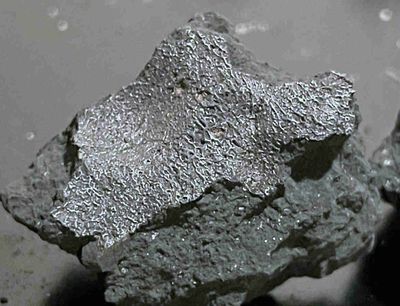


Amino acids make life on Earth possible. These precious molecules are often referred to as the building blocks of proteins. But scientists have discovered hundreds of amino acids in meteorites that have never before been seen on Earth.
From the fungi growing in the soil to the swifts screaming in the skies, all life that we know uses just 22 specific amino acids. From this limited number, every type of organic tissue can form. Yet there are over 500 amino acids known from nature.
Most of these have nothing to do with life, and a lot of them are not even found on Earth. We get them from space.
Molecules from other worlds
Thirty years ago, analysis of the famous Murchinson meteorite revealed the presence of 92 different amino acids. Of them, only 19 were also found on Earth. And it is not the only source rich in extraterrestrial amino acids.
On July 16, 2024, at 3:17 pm UTC, people across New York and New Jersey witnessed a "daylight fireball" – an asteroid that tumbled through our atmosphere and exploded in the air. Some of the fragments made it to the ground – well, through a roof! A large chunk smashed into a house in Hillsborough, New Jersey.
The collected material weighed a whopping 1.35 kilograms (2.9 pounds), and just last month researchers released an exciting analysis of it. There are differences in the type and percentage of amino acids present, but the research also found that there were a huge number of amino acids not of this world.
“Most of the amino acids detected in Hillsborough are rare or nonexistent in life on Earth, so they are truly extraterrestrial in origin,” coauthor of that work Dr. Danny Glavin from NASA’s Goddard Space Flight Center told CNN at the time.
“There are hundreds of amino acids in this meteorite and the majority of them do not occur naturally on Earth. The suite of amino acids in Hillsborough was even more diverse than those found in pristine samples returned from the carbon-rich asteroids Bennu and Ryugu.”
How to form an amino acid
Extraterrestrial amino acids can form in interstellar space within the icy cover of dust grains. Those ices are made of not just water, but carbon monoxide and ammonia as well. Cosmic rays and ultraviolet light can break and bind these molecules into amino acids.
When it comes to those from the Hillsborough meteorite, the origin might be different. This sample belongs to the extremely rare class of CM-type carbonaceous chondrite. Only 22 other meteorites on Earth belong to this group.
Scientists believe that these molecules instead formed due to the presence of water in an early phase of the object's parent body.
This is not surprising. Evidence has shown that asteroid Ryugu and asteroid Bennu, sampled by the Japanese probe Hayabusa2 and the NASA probe OSIRIS-REx, came from the same water-rich parent body.
Further chemical evolution might have occurred on the parent of the Hillsborough meteorite when briny chemistry took over. The researchers believe that it “may have added complexity in some clasts.”
It is unknown why, of all the amino acids that are out there, only a small fraction appear in the genetic code of Earth life. Still, asteroids in the past might have played a crucial role in bringing these moleculesto our planet. Studying their space origin is a window to that!