Technology
 PUBLISHED
 5
5


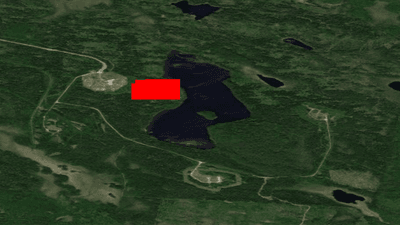


Satellite images of the test site of Russia's infamous "Satan II" superweapon taken this month appear to show that a test launch ended in failure.
The RS-28 Sarmat, sometimes called "Satan II", is a liquid-fueled intercontinental ballistic missile developed by Russia as a replacement for the Soviet-era SS-18. Back in October, Russian president Vladimir Putin claimed that work was almost finished on the missile, which would soon form the basis of the country's ground-based strategic nuclear forces.
That may have been a little premature, however, as three subsequent tests that have reportedly failed have shown. A potential fourth test, conducted at the Plesetsk Cosmodrome in northern Russia, appears to have ended similarly, after satellite images taken Maxar Technologies on Saturday showed a crater around 60 meters (200 feet) wide that wasn't visible earlier this month.
While Russia is as tight-lipped as you'd expect of a weapons test failure, giant craters are generally not what is left behind by a successful test.
“By all indications, it was a failed test. It’s a big hole in the ground,” Pavel Podvig, an analyst based in Geneva, who runs the Russian Nuclear Forces project told Reuters. “There was a serious incident with the missile and the silo.”
Nuclear specialist at the Carnegie Endowment for International Peace, James Acton, has responded to the satellite images.
It is unclear what could have gone wrong with the weapon, but with this apparent fourth successive failure, Wright speculated that it could raise questions about the proposed missile's feasibility. For now the missile, intended to reach targets thousands of kilometers away, appears unable to make it more than a few meters.