Technology
 PUBLISHED


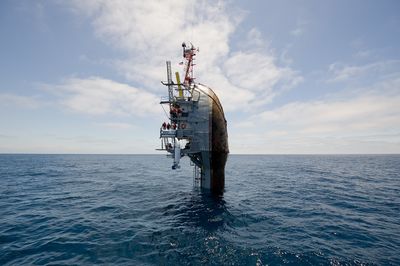


R/P FLIP, quite possibly one of the strangest maritime engineering feats ever built, has been saved from the scrapyard at the eleventh hour.
Also known as the FLoating Instrument Platform, FLIP is 108-meter (355-foot) long oceanic research platform that can be partially flooded and flipped by 90 degrees, allowing it to stand vertically in the water with over 90 meters (300 feet) of its body submerged.
It was decommissioned in August 2023 and towed to Mexico where it was planned to be scrapped. Unknown to the world until this week, there’s been a huge effort to save the research platform by the founder of DEEP, a design firm that wants to develop underwater human habitats.
Upon hearing about its imminent destruction, the team at DEEP headed to Mexico to intercept FLIP before it was taken to pieces.
"The direction from our founder was quite clear: Save her. Don't come back without her," Giulio Maresca, FLIP's new Captain, said in a statement sent to IFLScience.
Remarkably, they managed to save FLIP before sailing it back from Mexico, through the Panama Canal, and across the Atlantic to Europe, where it will be refitted and modernized at a French shipyard.

After making its “maiden flip” in 1962, the bizarre structure was used for over 60 years by the Scripps Institution of Oceanography to gather vital observations about oceanic and atmospheric phenomena. One of its specialties was acoustic research, uncovering the many ways in which sound waves are influenced by variations in the ocean, such as changes in temperature or salinity. It even helped scientists learn about the depths to which whales dive and the properties of the Earth's ever-changing crust.
FLIP fell on hard times in 2021 when the US Navy cut its funding, leading to its decommissioning in 2023. While some hoped it would be put on display in a museum, given its scientific and engineering significance, it was ultimately sent to be scrapped.

Not only has it avoided this fate, but it’s suggested that the research platform will be refitted so it can continue working to uncover the mysteries of the ocean and hydrodynamics.
“We look forward to announcing her relaunch in early 2026, and I'm thrilled to confirm that many oceanographic and research groups are already in contact to ensure access," added Kristen Tertoole, CEO of DEEP.
“I’m delighted by DEEP's decision to revitalize and modernize the R/P FLIP, a unique research platform that has served the ONR exceptionally well for years. This modernization initiative will significantly expand her capabilities in ocean science, observation, and exploration, breathing new life into a vessel that has been vital to our mission,” said Dr Tom Drake, Office of Naval Research.


 1
1