Technology
 PUBLISHED



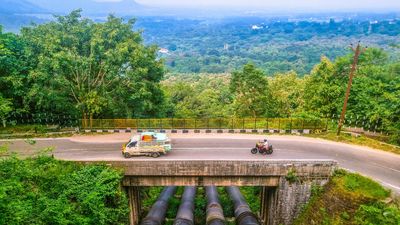


How does this combination sound: an aging dam, constructed over 130 years ago in a seismically volatile part of the planet, sitting above a highly populated area? This precarious mix is the reality of the Mullaperiyar Dam, a waning water barrier that some have described as "a ticking time bomb.”
The world is filled with aging dams built in the late 19th and early 20th centuries, many of which are already operating beyond their design life.
India has more than its fair share, including over 1,115 large dams that were built over 50 years ago. By 2050, the country will have over 4,250 large dams that will be over 50 years old and 64 large dams that will be over 150 years old, according to an analysis by the United Nations University (UNU) in 2021.
Mullaperiyar Dam
Among the worrying cases is the Mullaperiyar Dam, a 53-metre (173-foot) tall gravity dam constructed between 1887 and 1895 under the rule of the British Raj. It sits along the Periyar River in the southern Indian state of Kerala, nestled within the seismic hotspot of the Western Ghats mountains.
Past earthquakes have already put the dam to the test. In recent decades, several minor tremors have caused cracks to form in the structure, forcing engineers to repair it and reassess its safety.
But some argue they might not be so lucky next time. A 2011 report by the Indian Institute of Technology reportedly concluded that the Mullaperiyar dam wouldn’t survive an earthquake larger than 6.5 on the Richter scale. Should it catastrophically fail, UNU estimates that up to 3.5 million people would be at risk of disastrous flooding.
A breach could suddenly send a flash flood downstream through the Idukki reservoir and other dams along the Periyar River, inundating several densely populated districts in Kerala, including the coastal city of Kochi.
Why don't they just fix the problem?
Attempts to sort out the looming problem have been anything but straightforward. The dam is located in Kerala, but it is operated and maintained by the neighboring state of Tamil Nadu, which uses the diverted water to irrigate its farmland.
While Keralan officials have been pushing to knock down and rebuild the dam, claiming it’s a "ticking time bomb waiting to explode,” Tamil Nadu insists the dam is safe and argues there’s no need to carry out costly engineering work.
The dispute has become stalemated by legal complexity, having repeatedly landed before India's Supreme Court without a lasting resolution.
Tensions have been stirred up further amid claims that Tamil Nadu keeps opening the dam shutters in the middle of the night without warning, causing floods downstream in Kerala.
A global issue
This isn’t just a problem for South India. By 2050, the majority of people on Earth will live downstream of a dam beyond its design life, according to a UN analysis. Even removing a small dam can take years or decades of engineering work, and decommissioning large dams is no easy feat.
“Large dam construction surged in the mid-20th century and peaked in the 1960s–1970s, especially in Asia, Europe and North America, while in Africa the peak occurred in the 1980s. The number of newly-constructed large dams after that continuously and progressively declined,” Duminda Perera, lead author o a 2021 report and Senior Researcher at the United Nations University’s Institute for Water, Environment, and Health (UNU-INWEH), said in a statement.
“Overall, dam decommissioning should be seen as equally important as dam building in the overall planning process on water storage infrastructure developments,” added co-author and UNU-INWEH Adjunct Professor R. Allen Curry, based at the University of New Brunswick.