Health and Medicine
 PUBLISHED
 105
105


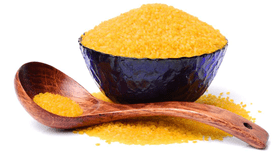


Genetically modified organisms (GMOs) are an ongoing source of controversy, with environmentalists fearful of the dangers associated with altering the DNA of plants and animals. Yet many scientists believe that GMO foods can help to end malnutrition worldwide, and that a crop known as Golden Rice could have already prevented millions of deaths if its use had not been restricted.
White rice is the staple food in many developing countries, yet it lacks several key micronutrients. As a result, one in three children under the age of five is thought to suffer from vitamin A deficiency (VAD), a condition that causes blindness and weakens the immune system.
According to the World Health Organization, up to 500,000 children lose their sight each year because of VAD, half of whom die within 12 months of going blind.
Back in 2000, a solution to this global tragedy appeared to have been found when cell biologists Peter Beyer and Ingo Potrykus published details of their creation: Golden Rice. This genetically modified version of white rice had been adapted to produce an orange pigment called beta-carotene, which the body uses to manufacture vitamin A.
Yet two decades later, global restrictions on Golden Rice have prevented it from being made available to those whose lives it could save. In a new book, science journalist Ed Regis chronicles the history of Golden Rice and assesses the many obstacles that have been put in its way.
While the very public opposition of groups such as Greenpeace have helped to foster a suspicion of all GMOs, Regis says the biggest barrier came in the form of an international treaty called the Cartagena Protocol on Biosafety. Passed in 2003, the treaty has formed the basis of a wave of restrictions that have made development, testing, and distribution of Golden Rice more or less impossible, despite a complete lack of evidence that the altered crop causes any harm whatsoever.
Yet while Regis is adamant that these restrictions are to blame for millions of children losing their sight and even their lives over the past 20 years, it looks as though the tide could be about to turn.
In 2018, Golden Rice was finally approved in the US, Canada, Australia, and New Zealand, paving the way for many developing countries – where Golden Rice is most needed – to follow suit.
Bangladesh, for example, is set to decide on whether or not to allow the use of Golden Rice on November 15 2019.