


 Nature
 PUBLISHED


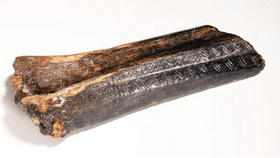


Dredged from the depths of the North Sea, researchers believe they have found what could be the skull of the oldest Dutchwoman known so far. Not only that, but a whole host of other finds from the seabed help to paint a detailed image of what life was like for these hunter-gatherers 13,000 years ago. These finds include a decorated bison bone engraved with what is believed to be the oldest example of Dutch artwork.
During the last ice age, when monumental amounts of water were locked up in the massive ice cap and glaciers covered much of northern Europe, the sea level was much lower than it is now. The North Sea used to be a massive delta, a vast environment of grasslands, marshes, and forests criss-crossed with rivers and streams now known as Doggerland, that connected the Netherlands to southeastern UK.
As the mammoths that once roamed these regions dwindled, the habitat that they created – known as mammoth steppe – gave way to pine forests that gradually spread across the lowland. Red deer, elk, and bison moved into these forests, and early human pioneers followed them into the woods too.

“These hunter-gatherers must have roamed these plains and perhaps one season they visited what is now the U.K. and the next season stayed in what are now the Netherlands,” explained Marcel Niekus, co-author of the new study published in Antiquity, to Live Science. “This now-submerged landscape is of crucial importance to our understanding of our past. It is, so to speak, a treasure chest of archaeological finds.”
In 2013, fishermen pulled up a skull from the seabed of the North Sea, which researchers have now identified as belonging to a woman between the ages of 22 and 45, who probably lived in Doggerland around 13,000 years ago. But that is not all that has been found, as a few years earlier, not far from where the skull was found, other fishermen discovered a shard of 13,500-year-old bison bone engraved with an abstract zig-zag pattern.

The bison bone is intricately carved, with multiple zig-zagging lines running parallel to each other. This geometric art style has been attributed to the Federmesser culture of northwest Europe.
The finds – in addition to many other bones and tools that have come from the North Sea – help to build up a picture of what life was like during the Palaeolithic. It was a period in which the inhabitants of Europe were still hunter-gatherers, living off the land and moving with the seasons.
Eventually, a wave of people from the east brought with them new farming technology and culture, and almost completely displaced the original inhabitants of this now watery land.
[H/T: Live Science]




 1
1