Humans
 PUBLISHED


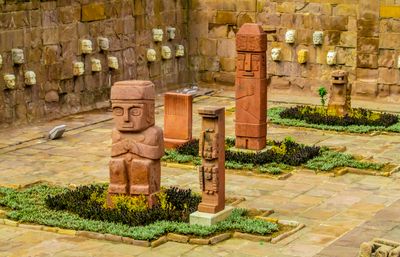


Ceremonial statues depicting human-animal chimeras played a significant religious and political role in the ancient city of Tiwanaku, which predated the Inca civilization in what is now Bolivia. Known as chachapumas – meaning “were-felines” – these startling sculptures may have been associated with human sacrifice rituals, and new research suggests that they were crafted from volcanic rocks extracted from sacred sites on the shores of Lake Titicaca.
Tiwanaku’s heyday lasted from roughly 500 to 1000 CE, with the city-state becoming one of the the most culturally significant polities in South America prior to the emergence of the Incas. During this period, the city’s elites commissioned the construction of numerous temples and ceremonial platforms, which often featured chachapumas at their entrances.
Despite their name, though, chachapumas did not always depict feline-human hybrids, and often featured a mash-up of characteristics belonging to multiple different animals, including camelids and bats. “Thus, they were stone statues of were-animals, which were located in the Tiwanaku monumental core and were crafted primarily of volcanic rocks,” write the authors of the new study.
Significantly, these strange creatures are always depicted clutching a decapitated human head in one hand, and either a club or an axe in the other. Some have been unearthed in human sacrificial pits, indicating a clear link between chachapumas and ritualized killings.
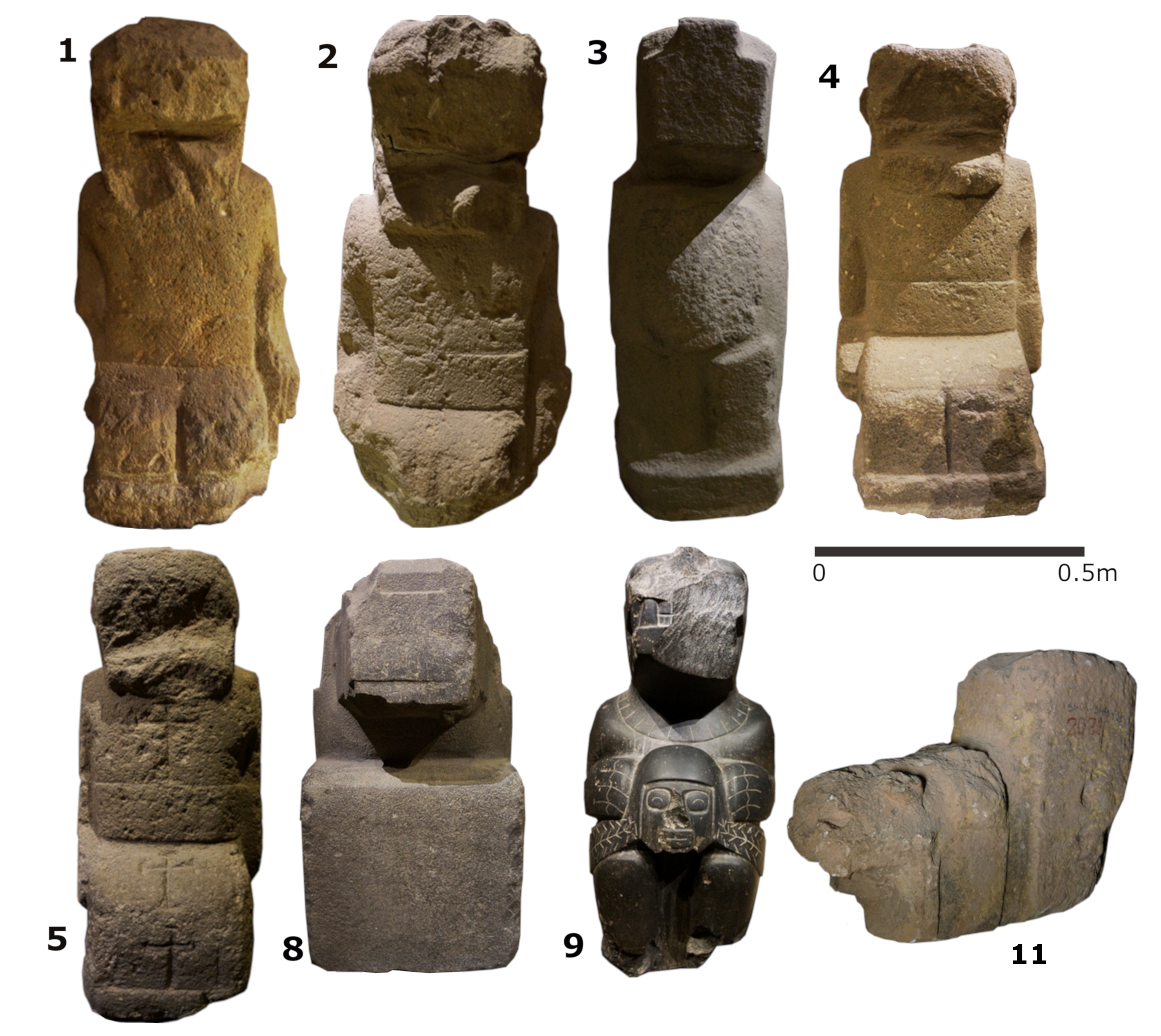
Given the importance of these figurines to Tiwanaku’s religious and political functioning, the researchers sought to determine the source of the volcanic material used to produce nine chachapumas housed at the Tiwanaku Lithic Museum. Using portable X-ray fluorescence analysis, the team discovered that all of these relics were carved from rocks that had been transported over 40 kilometers (25 miles) from the shores of Lake Titicaca.
Specifically, three of the chachapumas were made of basaltic rocks from the Copacabana Peninsula, while the remaining six were fashioned from andesitic rocks from the area between Mount Ccapia and Juli.
Explaining the significance of these findings, the researchers note that “the regions of Copacabana and Mount Ccapia, and specifically their outcroppings of volcanic stone, are regarded as sacred landscapes and ancestral mountains by contemporary and historic populations.” It’s therefore highly likely that the inhabitants of Tiwanaku viewed rocks from these locations as spiritually charged, and deliberately used them to create their ceremonial were-animal statues.
Previous archaeological experiments have indicated that it is perfectly possible to transport up to nine tons of rock from the Copacabana Peninsula using reed boats, indicating that the builders of Tiwanaku were capable of procuring large quantities of this sacred stone. According to the researchers, the incorporation of these elements into the ceremonial fabric of Tiwanaku may have served to heighten the polity’s spiritual and political might.
“In my view, one of the broader implications of this research is that it not only identifies the geological origin of a particular type of statue from Tiwanaku, the first state-level society of the Andean Altiplano, but also opens new avenues for investigating how non-local volcanic stones were deliberately acquired and transported for use in monumental architecture and ritual spaces,” explained study author Luis Flores-Blanco in an email to IFLScience.
“Such costly efforts may have played an important role in creating and reinforcing the powerful ceremonial landscape that characterized the Tiwanaku center.”
The study is published in the Journal of Archaeological Science: Reports.