Humans
 PUBLISHED
 2
2





Ancient Romans had ideas about sex and sexuality that were very different from ours today, and many representations of these attitudes have been preserved on the walls of buildings at Pompeii. In particular, the Suburban Baths have images that really show off the Roman’s sexual exploits in their many forms.
The bath house beyond the gates
The Suburban Baths are located to the west of the Marine Gate in Pompeii. Unlike other bath houses in the city, like the Stabian Baths and those of the Forum, the Suburban Baths were private. As these baths were built later than the others, possibly during the reign of Tiberius (14-37 CE), they appear outside of the city gates which, by this point, were no longer used for defensive purposes.
The baths are laid out on three levels and can be seen by tourists visiting the city that was lost to the world for centuries after Mount Vesuvius erupted in 79 CE. All the rooms in the complex had windows that looked out over the Gulf of Naples. There were various bathing options for guests, including two rooms for taking cold baths (Frigidarium), a warm bath (Tepidarium), which helped visitors acclimate to the change in temperatures, and then a hot bath (Calidarium).
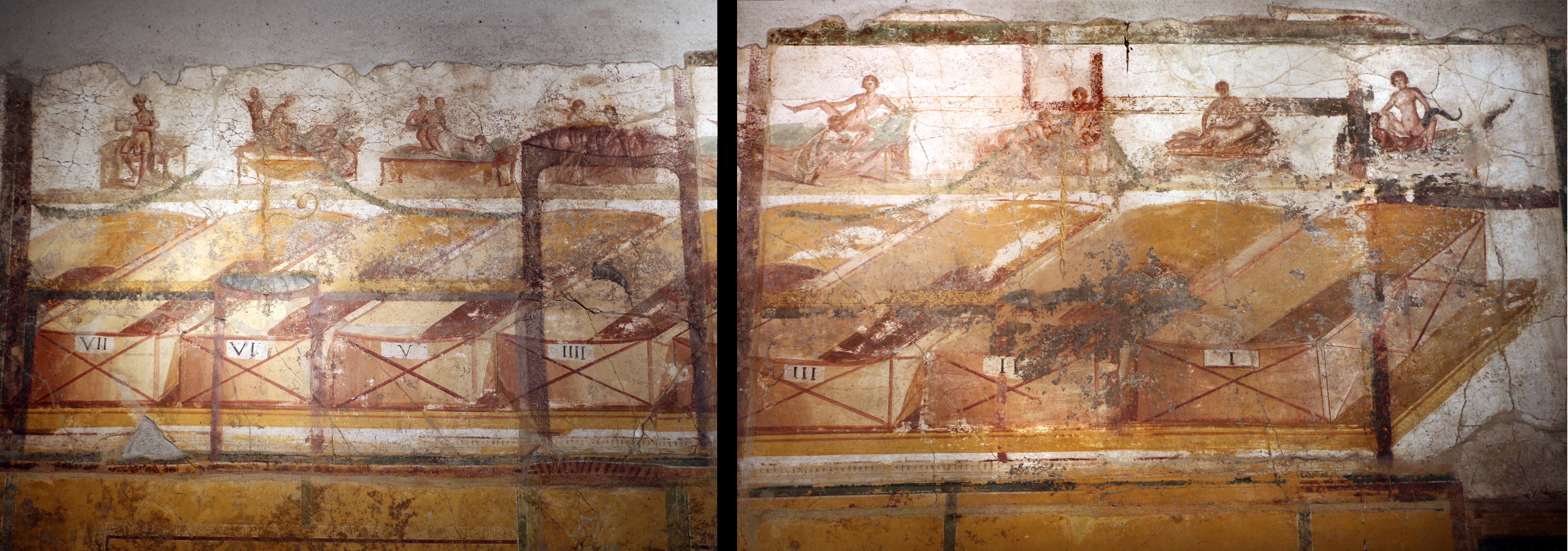
But in terms of sexual displays, the action, as it were, was housed in the changing room (apodyterium) that followed the entrance hall. The walls of this room were decorated with eight frescos showing off extremely erotic content. The exact purpose of these images is unclear. Some believe they were a kind avert or hint at prostitution that could take place in the baths. This type of activity, though technically illegal, was common in these places. However, there are others who believe they are merely decorations showing off types of scenes that were enjoyable for Romans who appreciated them.
Under each painting is a painting of a box with a number on it. It is possible that these painted boxes once had actual boxes on them that were placed on a wooden shelf and were used by visitors to store their clothes.
Roman sexuality: what was acceptable and what was depicted
It is pretty well known that the Romans were not as shy about sex as much of our society is today. Everything from objects, art, literature and inscriptions recovered from archaeological sites from across the former Roman empire has provided us with a clear idea of their erotic inclinations. But while it is often believed that the Romans operated with a kind of “anything goes” attitude toward sex, the reality is that there were various social norms and legal strictures that governed sexual behavior.
For instance, it was socially acceptable and even expected for Roman men to seek sex with both female and male partners. However, there were rules to this. Males were able to have sex with other men as long as they maintained the “active” or “penetrative” role. This protected their masculinity. But if they sought a “passive” role, receiving penetration or performing oral sex on either women or other men, then their masculinity was challenged and could lead to them being labeled effeminate.
Obviously, this all hints at a sexual double-standard, as it was considered less acceptable for a man to perform oral sex than for women to provide the same service.
As such, there were “abnormal” forms of sexual act, many of which were depicted in art. But just because something appeared in art, does not mean it was encouraged or accepted in real life, for the above reasons. So we must be cautious when viewing erotic materials preserved in places like Pompeii, as they may not be representative of what was actually permitted.
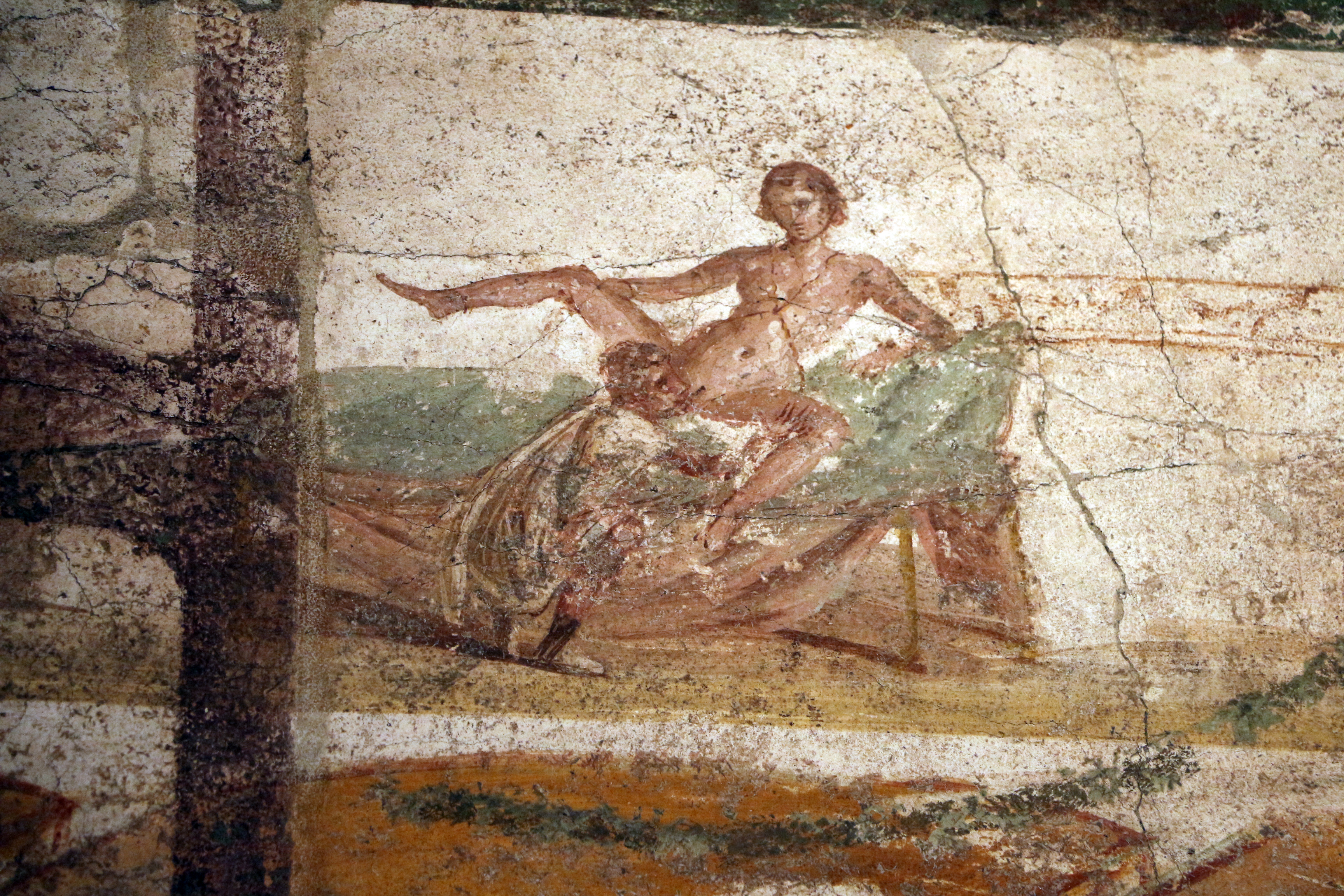
An example of this is visible in a few images at the Suburban Baths. In one fresco, a woman is receiving cunnilingus from a man, which would not have been frowned upon in reality.
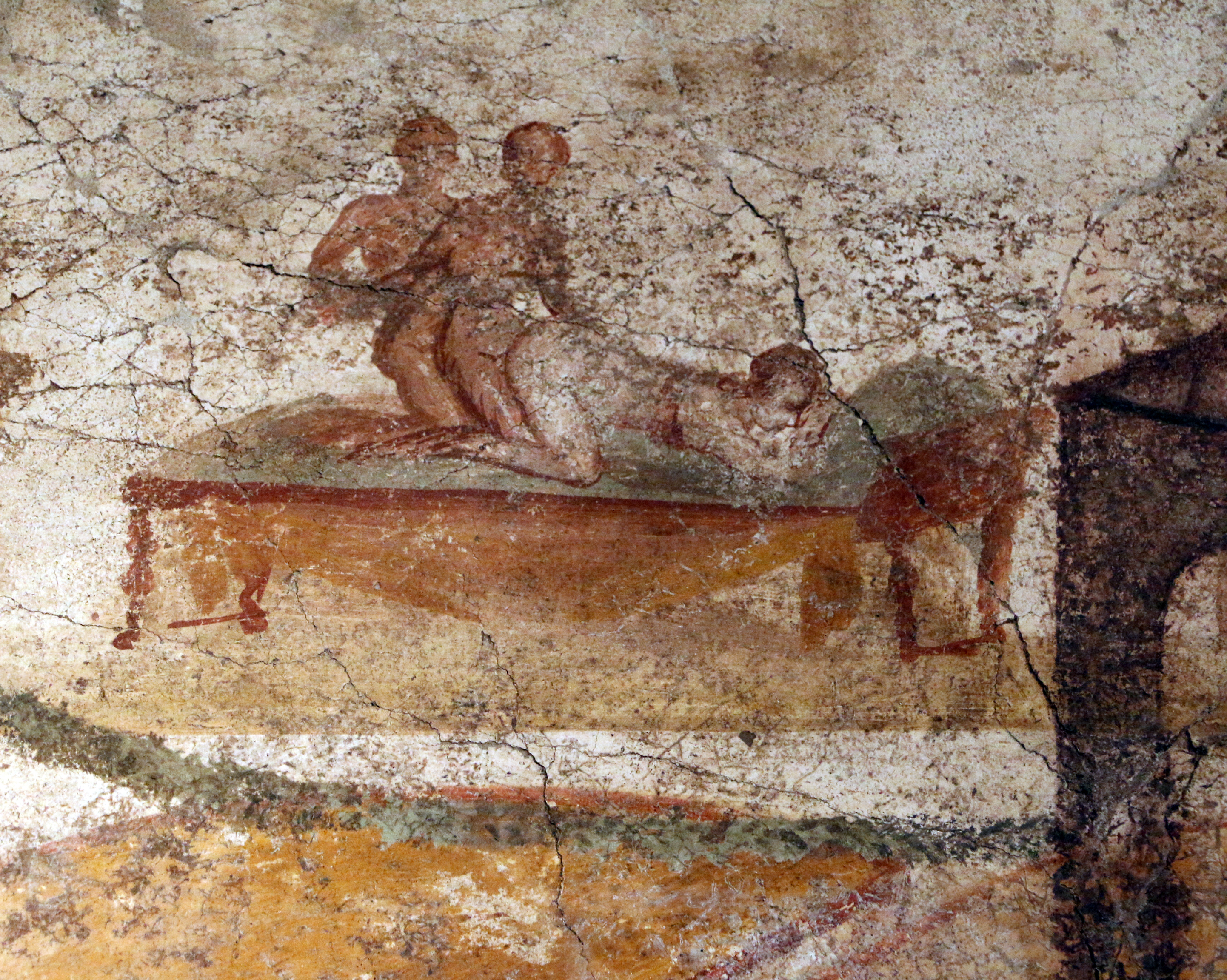
Another example can be seen in a fresco showing a threesome between two men and a woman. In the image, the woman is receiving penetration from behind by one man who is then being penetrated by another behind him.
When Pompeii, and other Roman sites, were first excavated, many of their more erotic objects and images were locked away or otherwise censored because of their explicit nature. But today, visitors to Pompeii can see them in all their creative glory.