Nature
 PUBLISHED


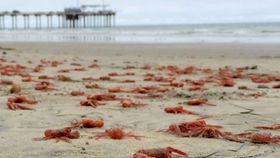


Beaches in California are turning lobster-red, literally, as droves of small crustaceans are washing up along their shores.
The rest of this article is behind a paywall. Please sign in or subscribe to access the full content.For about a week, numerous beaches from Orange County right down to San Diego have been frequented by thousands of red tuna crabs (Pleuroncodes planipes), many of which appear to be dead or on their last legs.
This species, which is actually from the lobster family, grows from around 2.5 to 7.5 centimeters (1 to 3 inches) in length. They can usually be found in waters off the coast of Mexico’s Baja California. However, with warmer water temperatures, they tend to drift up the west coast of the U.S.
Scientists are hence pointing their finger towards El Niño as the culprit for this freak event, considering this year’s was such a strong one. Although it peaked some months ago, its after-effects are still being felt. One of which is the “El Niño effect”, which alters ocean temperatures and currents in the eastern Pacific.
Thousands of dead crabs in Laguna Beach today @GigiGraciette @ABC7 let's blame #ElNino #weather #crabs #lagunabeach pic.twitter.com/RUyKVFUswn
— tippol photography (@OttoTippol) 13 May 2016
“Typically such strandings of these species in large numbers are due to warm water intrusions,” said Linsey Sala, collection manager for the Pelagic Invertebrates Collection at Scripps Institution of Oceanography, in a statement.
Reuters reports that there was a similar mass stranding of this species in June 2015, which also coincided with an El Niño event.
Just in case you’re already thinking about heading down there with some garlic, butter, and a frying pan, scientists have recommended that people don’t eat them as there's a chance they could contain toxins.


 2
2