Nature
 PUBLISHED


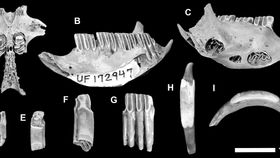


Scientists have described three new mammals species that trotted around the Cayman Islands until just 300 years ago. The evidence, oddly enough, comes in the form of fossilized bones that appear to have been swallowed down, churned up, and pooped out by Cuban crocodiles.
Researchers led by the Zoological Society of London (ZSL), the American Museum of Natural History, and the New Mexico Museum of Natural History recently discovered the new species by studying bones found in a number of museum collections that were found between the 1930s and 1990s.
Writing in the Bulletin of the American Museum of Natural History, the team note the bones have "an unusual preservation that appears to represent digestion by crocodiles." Anatomical analysis and ancient DNA of the strange specimens revealed two new large rodents (Capromys pilorides lewisi and Geocapromys caymanensis), as well as a small shrew-like mammal (Nesophontes hemicingulus).
When the Cayman Islands were "visited" by Sir Francis Drake in 1586, he and his crew wrote about the island's "coneys" and “little beasts like cats”. It’s now believed that these newly described species were the animals they were referring to. Unfortunately, it looks like these colonizers, along with their introduction of rats and cats, could have spelled the end for these small mammals.
"Humans are almost certainly to blame for the extinction of these newly described mammals, and this represents just the tip of the iceberg for mammal extinctions in the Caribbean. Nearly all the mammal species that used to live on these tropical islands, including all of the native Caribbean sloths and monkeys, have recently disappeared,” co-author Professor Samuel Turvey, Senior Research Fellow at ZSL's Institute of Zoology, said in a statement

"It's vitally important to understand the factors responsible for past extinctions of island species, as many threatened species today are found on islands. The handful of Caribbean mammals that still exist today are the last survivors of a unique vanished world and represent some of the world's top conservation priorities."
Lots of questions still surround these newly discovered critters. Their closest living relatives, Desmarest's hutia (Capromys pilorides), are still found on the neighboring island of Cuba. But, how and when did they manage to get to the Cayman Islands, several hundreds of kilometers across open seas? One solution could be that they "sailed" over on a raft of vegetation, the researchers say. However, for now, that remains unanswered.
"Although one would think that the greatest days of biological field discoveries are long over, that's very far from the case,” study co-author Professor Ross MacPhee of the American Museum of Natural History added. “With only one possible sighting early in the course of European expansion into the New World, these small mammals from the Cayman Islands were complete unknowns until their fossils were discovered.“


 1
1