Space and Physics
 PUBLISHED



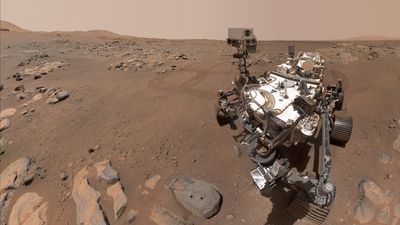


NASA’s Perseverance rover has now driven farther than any vehicle on either Mars or the Moon. Clocking an impressive 45.22 kilometers (28.10 miles), it has surpassed the previous record established by Opportunity of 45.16 kilometers.
Perseverance is currently traveling to an area called “Idubi”, which is part of the wider western rim of the Jezero Crater.
The wider area has been nicknamed “Lac de Charmes”, and it might have some of the oldest terrain ever directly explored in the solar system. Due to Earth’s erosion and tectonics, there are no regions quite as old even on our own planet.
A record distance in a record time
Perseverance has been on Mars for roughly 5 and a half years now, with the distance record being broken during the rover’s 2006th Martian day, or sol. This was way faster than Opportunity managed the same distance.
Mark Maimone, a long-time rover driver and deputy team chief for robotic operations on Perseverance at NASA's Jet Propulsion Laboratory (JPL), teased IFLScience with this record-breaking moment earlier this year.
“I do want to note that Opportunity drove for nearly 15 years, whereas we are not yet at five years of operations, so we're likely to surpass Opportunity's record 3 times faster than it did,” said Maimone in January.
The rover broke this record distance in such a brief time thanks to the leap forward in technology. The team stressed that the game-changer tech is in Perseverance's ability to autonomously navigate, as the rover can safely assess hazards as it goes without human input.
“It's a great engineering achievement to have our latest Mars rover able to drive itself quickly enough that self-driving is now the primary way we accomplish long drives,” Maimone told IFLScience. “In fact, over 90 percent of all driving on Perseverance is now being done autonomously.”
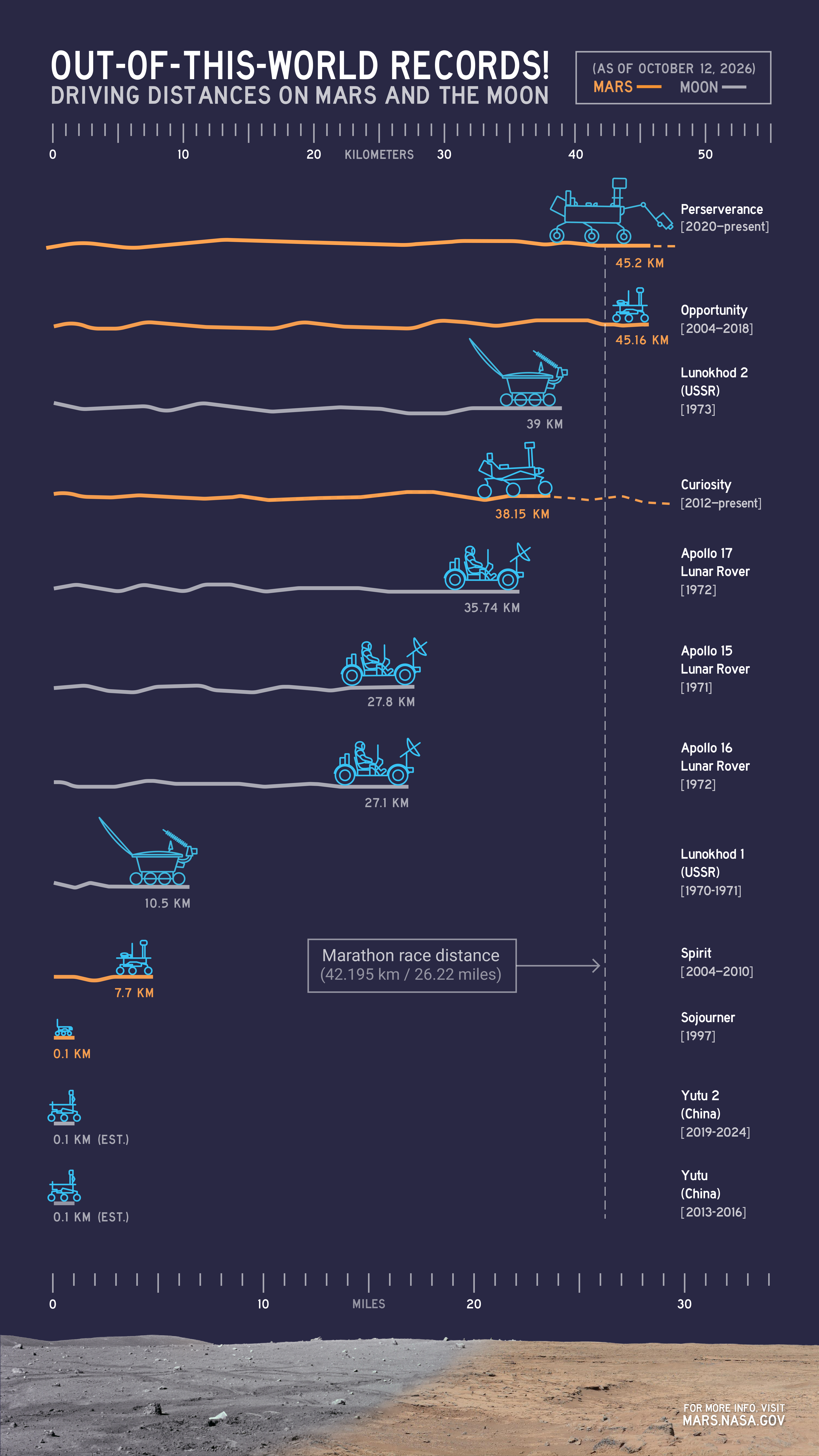
A long road ahead
Perseverance is likely to retain the record for a long time to come.
In summer 2025, JPL certified that the rover actuators – the parts that turn the wheels – will perform optimally for at least another 60 kilometers (37 miles). The goal of driving 100 kilometers (62 miles) on Mars is very possible.
We should say bar unfortunate incidents, but Maimone is confident that no matter what Mars can throw at Percy, the team can find solutions.
“We've learned a lot from past missions, including how to operate the rover even after motors fail,” Maimone explained.
“Spirit lost a drive motor and had to drag a wheel, but that dragging ended up uncovering white silica that led to one of the best science results of the mission. Opportunity eventually had to drive with its arm extended out in front of it when an arm motor failed.”
“And Curiosity had to completely redevelop its drilling strategy when its drill's feed motor failed. Each mission continued long after something failed; we expect Perseverance to persevere as well. We look forward to operating as long as we can on Mars, driving, studying, collecting samples.”
Having access to an actual Martian rover driver, we couldn’t help but ask about what operating a vehicle on another world is like.
“When I was a kid, I was amazed by pictures from the Viking missions, including a photo of the science team getting a first look at pictures from Mars,” Maimone revealed.
“The prospect of being one of the first humans to see pictures from another world filled me with awe. Yet every time we drive to a new location, that's exactly what our rover planners get to do. Driving on Mars is truly a dream come true.”
May Perseverance continue to drive for many more years, farther than anyone human or robot has on another world.