Space and Physics
 1
1






At the level we experience reality, everything seems deterministic. If we pick up a pen from a table and we let go, it will fall down. Quantum mechanics, on the other hand, isn't deterministic, but it is ruled by probability. This makes all manner of peculiar things possible, including perfect randomness.
Crucial to this is Bell’s theorem. The theorem postulates that quantum mechanical effects can't be explained by a deterministic theory that obeys the finiteness of the speed of light. This is a cornerstone of quantum mechanics, and it has been tested extensively.
“Whenever people talked about the Bell's theorem, they were more interested in the opposite direction: they were asking ‘can something be perfectly predicted?’ And the answer was no, it's a little bit random,” Renato Renner at ETH Zurich told IFLScience.
my real motivation to do it was just to answer the fundamental question: can we generate perfect randomness?
Renato Renner
Renner has instead been looking from the other side, at randomness itself. If there is some randomness, could there be a way to make a system with perfect randomness, something that can never be predicted?
“We realized when I talked to colleagues working in quantum information that one could actually use a Bell test," Renner explained to IFLScience. "We can develop it further and develop it into something that delivers perfect randomness, in a sense. But this was a purely theoretical idea at the time. This was roughly 20 years ago.”
A Bell test might measure a pair of photons that are "entangled" with one another so that when you observe the state of one you know the other's state regardless of distance. This is something Albert Einstein called spooky action at a distance.
Collaborating with Andreas Wallraff and Anatoly Kulikov, also at ETH Zurich, Renner's Bell test setup uses two quantum bits, or qubits separated by a 30-meter tunnel in which entangled microwave photons fly back and forth. This means a quantum measurement on one qubit, which randomly yields the values “0” or “1”, influences automatically and at a distance whether “0” or “1” is measured on the second qubit.
This is not yet enough to produce a perfect random number, however. The team adds to this a technique from computer science called a two-source extractor. The resulting quantum protocol is called randomness amplification. It is device-independent; it makes no assumptions about what goes on inside the system and just produces perfectly random numbers.
The setup is an example of a loophole-free Bell test, something that was realized in an experiment only a decade ago. Still, it wasn't just a matter of combining the theory and the experiment. Those Bell tests produced a few hundred data points; for good randomness generation, you Renner's team needed a few million.
“It's kind of an old dream to realize a perfect die, in the sense of having really perfect randomness,” Renner said. “And I'm now really happy this worked out!"
It's just impossible to predict the future. There are certain processes that we cannot even make a good guess!
Renato Renner
There are two main applications that voraciously await better randomness. One is cryptography. A system that can generate true random keys, for example, is a system that is as secure as it is possible to be.
The other is games of chance. Lotteries and casinos – assuming honesty – are games of luck, but not truly random. Though it should be said that better gambling or cryptography was not the driver for this research.
“Now one can say, 'Okay, that can also be useful for cryptography' and all that,” Renner continued. “But to be honest with you, my real motivation to do it was just to answer the fundamental question: can we generate perfect randomness?”
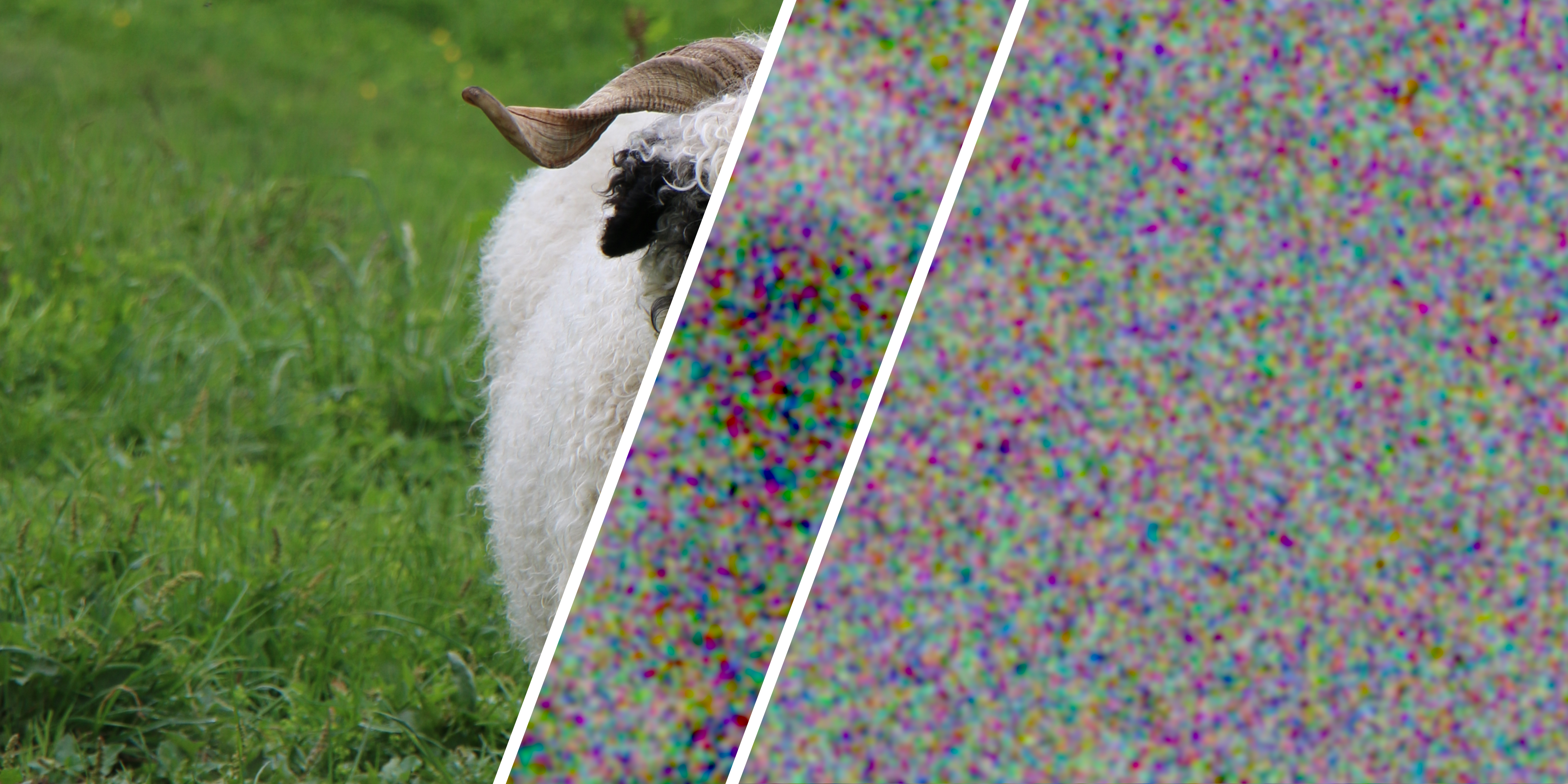
Another aspect of the work is that it has demonstrated a quantum advantage. There is no classical technology, no regular supercomputer, no matter the power, that could perform this task.
“I think what our work emphasizes is that there is normally a little bit of randomness in nature. There are certain processes that are just completely random,” Renner told IFLScience. “It's just impossible to predict the future. There are certain processes that we cannot even make a good guess!”
The results also raise some more philosophical implications: “I think to have these questions – is nature deterministic? – back in our minds is something important,” said Renner.
“I hope that this research will make people again aware that there are interesting questions about nature. And these are not only questions that just lie there; we can actually answer some of them!”
A paper describing the work was published in the journal Nature.