Space and Physics
 PUBLISHED
 3
3


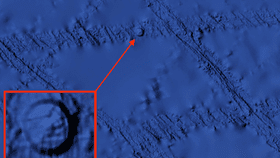


Eagle-eyed internet dwellers are claiming they’ve used Google Earth to discover a UFO laying on the bottom of the ocean just a short flying saucer trip away from the Nazca Lines in Peru.
Scott C. Waring from UFO Sightings Daily recently posted about the discovery, stating “this disk at the bottom of the ocean is 100% proof of ancient aliens and the technology is just sitting there on the bottom of the ocean.” A link to the location of the feature on Google Earth can be found here.
The circular feature, measuring around 7 kilometers (over 4 miles) in diameter, can be found off the coast of Peru near the site of the Nazca Lines, vast pre-Columbian geoglyphs carved into the rocky coastal desert hills of the Palpa Valley (and another thing that definitely wasn’t the result of aliens, despite what some might say).
As you’ve hopefully already guessed, this is not a UFO nor the remains of a long-lost city. In fact, utmost likely not even an actual physical feature. Live Science pointed out that unusual patterns on the seabed can be seen on Google Earth, but it’s little more than a digital artifact left behind by the way data is collected, processed, and combined with other data sets.
In other words, the shapes and patterns you see on the seabed in Google Earth are not an accurate representation of the seafloor.
But hey, don’t let that stop you from trawling Google Earth for hours and hours looking for any unusual shapes on the seafloor.