Culture and Society
 PUBLISHED




When you buy baby carrots, you probably assume you are buying what the name suggests: carrots that were yoinked out of the ground before they could reach full maturity. But, as people are currently learning over on Reddit, it isn't quite as simple as that, and it's possible you may have been eating regular carrots all this time without realizing it.
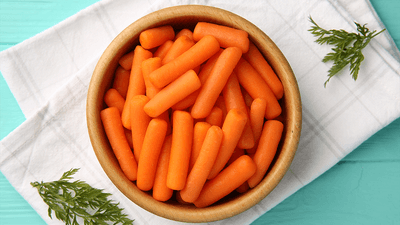
First off, "true" baby carrots are a thing. There really are monsters farmers out there who will take carrots out of the ground before full maturity, and then sell these baby carrots to consumers. But those are not the most commonly sold "baby carrots". The ones bought in huge numbers are not baby carrots at all, and were invented in the 1980s by Californian farmer Mike Yorusek.
Yurosek, who was a farmer in Newhall, California, says that he became sick of seeing how many carrots ended up going to waste due to not quite being pretty enough for consumers, with around 400 tons of produce going down the waste chute every day. These discarded carrots could be fed to animals, but beyond a certain limit, "their fat turns orange", Yurosek told USA Today.
But these carrots, despite looking a little funny, were perfectly edible. They were only discarded due to supermarket requirements.
"In the 1980's supermarkets expected carrots to be a particular uniform size, shape, and colour. Anything else had to be sold for juice or processing or animal feed, or just thrown away," The Carrot Museum explains.
Using a potato peeler at first, and then an industrial green bean cutter bought from a frozen food company that was going out of business, Yurosek went about whittling down the ugliest carrots into smaller pieces to be sold in bags. He came up with two products to show potential buyers, small balls of carrot he called "bunny balls" and longer sticks now known as "baby cut" carrots, or sometimes "mini carrots".
The bunny balls did not catch on, but the baby cut carrots sure did.
"Most baby carrots sold in U.S. and U.K. supermarkets are really what the industry calls 'baby cuts' – made from longer carrots that have been peeled and cut into a smaller size," The Carrot Museum continues. "These carrots have been specifically bred to be smaller in diameter, coreless and sweeter than regular carrots."
In the year following the invention of baby carrots, carrot consumption in the US shot up by almost 30 percent, while other manufacturers jumped at the chance to reduce waste and make more money from their crops. By 1997, consumption had doubled what it had been a decade earlier.
"The development and rapid consumer acceptance of packaged fresh-cut carrot products during the 1990s has helped the carrot industry evolve from supplier of low-value bulk products to marketer of relatively upscale value-added products," a 2007 report by the USDA explains. "Fresh-cut carrot products have been the fastest growing segment of the carrot industry since the early 1990s. Within the $1.3 billion fresh-cut vegetable category [...] carrots account for the largest share (about half) of supermarket sales, followed distantly by potatoes, celery, and others."
While they may not be what people thought they were, baby carrots are better for the environment than letting all those carrots go to waste, and a popular convenient snack for consumers. They can be forgiven the slightly misleading name.