Humans
 PUBLISHED





A jawbone identified as being from Paranthropus, a genus closely related to our own, has been found in the Afar region of Ethiopia. That makes it the northernmost evidence of Paranthropus by 1,000 kilometres (600 miles). Moreover, we’re learning Paranthropus could survive in a wider range of conditions than we thought, proving this was an adaptable member of our family.
Human evolution was once imagined to be something like a relay, where the last common ancestor of chimpanzees and humans passed the baton to one species, which then turned it over to several others before reaching us. Some may still see it that way, but palaeoanthropologists know the truth is very different. At least 15 hominin species have been identified (debate continues about a few), and at the rate new ones are being found, it's expected there will be plenty more.
We are increasingly finding that many hominins coexisted in space as well as time, making it hard to know who was responsible for specific tools and who represents our direct ancestor. The three (or possibly four) known species of Paranthropus represent part of this wonderful but bewildering diversity. The new discovery hints that they have had a bigger role in the story than previously thought.
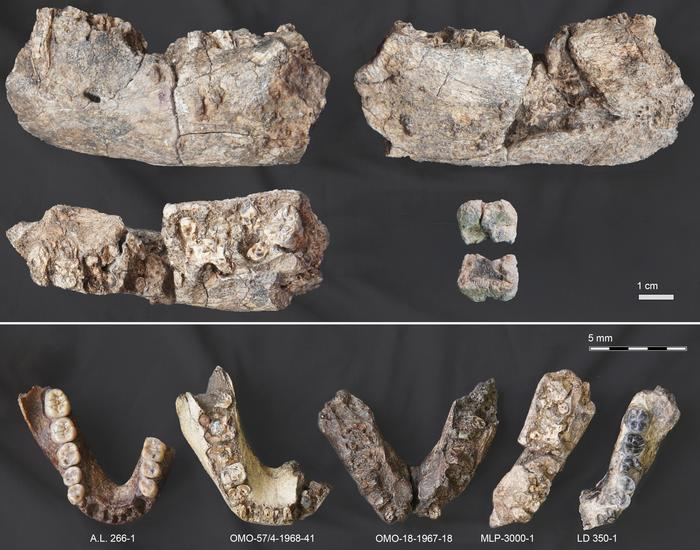
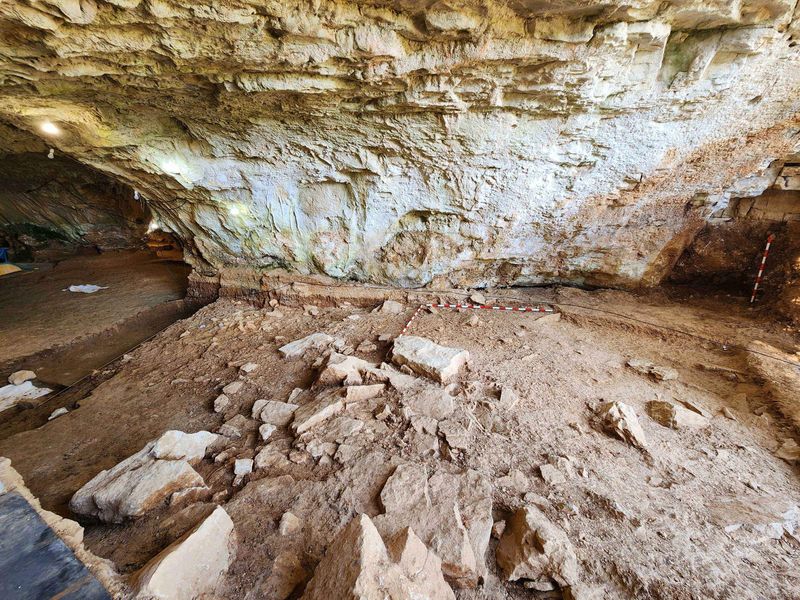
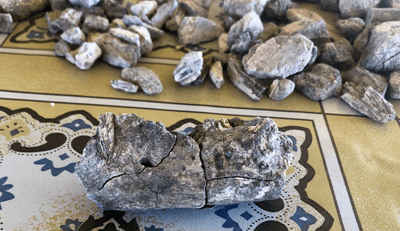
The new fossil is an incomplete jawbone found in 2.6-million-year-old rocks in the Mille-Logya area of Afar. That makes it one of the earliest Paranthropus specimens we have, with the species considered to have first appeared 2.9 million years ago. More significantly, Afar is in northern Ethiopia, while the previous northernmost example is from the south, which is separated by highlands. Paranthropus' early habitat apparently included wetter and more forested territory than its later habitat.
It’s not as though our previous failure to find Paranthropus this far north reflects a lack of looking.
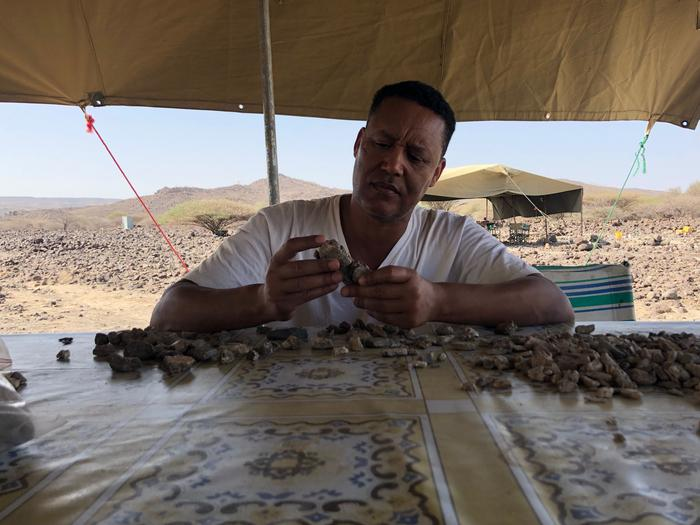
“Hundreds of fossils representing over a dozen species of Ardipithecus, Australopithecus, and Homo had been found in the Afar region of northern Ethiopia, so the apparent absence of Paranthropus was conspicuous and puzzling to paleoanthropologists, many of whom had concluded the genus simply never ventured that far north,” Professor Zeresenay Alemseged of the University of Chicago said in a statement. Indeed, Afar is where the oldest-known member of our genus was found, alongside a new, unnamed hominin species.
“While some experts suggested that dietary specialization restricted Paranthropus to southern regions, others hypothesized that this could have been the result of Paranthropus’ inability to compete with the more versatile Homo,” Alemseged added. Might a little bias in favor of our own genus have swayed our view of the relative capabilities? Who knows, but Alemseged went on: “Neither was the case: Paranthropus was as widespread and versatile as Homo and the new find shows that its absence in the Afar was an artifact of the fossil record.”

Paranthropus’ most distinctive features were their heavy jaws and gigantic molars, leading to them being nicknamed the “nutcracker” genus. It was assumed they ate foods that needed extensive chewing: perhaps they couldn’t use stone tools to pre-prepare their meals, some reasoned, or at least couldn’t use them as well as their Homo contemporaries.
The more we learn, the more questionable these ideas look. Three months ago, we learned that Paranthropus boisei had hands well-suited to tool use, and indeed many of the tools thought to have been made by early Homo could have been the work of Paranthropus. Our ancestors might have even got ideas from them.
Meanwhile, competition between Paranthropus and Homo was not so intense they couldn’t literally walk beside each other. Two million years ago Paranthropus, Homo and Australopithecus all lived close to each other in South Africa, so the fact that much further north there was also extensive hominin diversity fits the developing picture.
Because it is their jaws that make Paranthropus stand out, this specimen is easy to place by genus. However, whether it belongs to a known species, or represents a new one, is less clear. It is possible that some of the other fossils found in Afar that have been tentatively attributed to other hominins were also Paranthropus.
“If we are to understand our own evolutionary trajectory as a genus and species, we need to understand the environmental, ecological, and competitive factors that shaped our evolution,” said Alemseged. “This discovery is so much more than a simple snapshot of Paranthropus’ occurrence: It sheds fresh light on the driving forces behind the evolution of the genus.”
The study is published in Nature.