Nature
 PUBLISHED


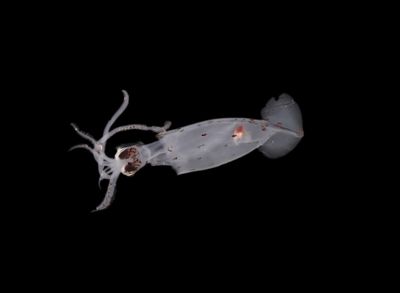


Within a deep canyon that humans had not laid eyes on before, scientists discovered at least 100 new marine species, each more weird and wonderful than the last.
The ocean critters were recently found within the Bounty Trough off the east coast of New Zealand's South Island during a three-week voyage on the research vessel Tangaroa, operated by New Zealand's National Institute of Water and Atmospheric Research (NIWA).
A crew of 21 scientists onboard the Ocean Census expedition recently ventured to this far-flung patch of the Southern Hemisphere to document new marine species – and their efforts did not disappoint.
Along the 800-kilometer (497-mile) Bounty Trough, at depths of up to 4,800 meters (15,748 feet), the team collected around 1,800 samples. They’re still sifting through all the specimens, but they expect to identify over 100 new species, including dozens of mollusks, three fishes, a shrimp, a cephalopod, and a new genus of coral.
“It looks like we have a great haul of new, undiscovered species. By the time all our specimens are examined, we will be north of 100 new species. But what’s really surprised me here is the fact this extends to animals like fish – we think we’ve got three new species of fish,” Professor Alex Rogers, co-leader of the expedition and science director at Ocean Census, said in a statement.

“We’ve gone to lots of different habitats and discovered a whole range of new species, from fish to snails, to corals and sea cucumbers – really interesting species that are going to be new to science,” added Sadie Mills, voyage co-leader and marine biologist at the NIWA.
However, not all of the species can be easily slotted into the taxonomic tree of life. One specimen is proving to be particularly confusing; members of the team have speculated whether it might be a seastar, a sea anemone, or a zoanthid-like creature, but the creature does not fit into any of these categories.
“We’ve got a lot of experts here having a look who are very excited,” explained Dr Michela Mitchell, a taxonomist at the Queensland Museum Network.
“We now think it could be a new species of octocoral, but also a new genus [wider grouping of species]. Even more excitingly, it could be a whole new group outside of the octocoral. If it is, that is a significant find for the deep sea and gives us a much clearer picture of the planet’s unique biodiversity,” she added.

It’s estimated that 91 percent of ocean species are currently unknown to science, while more than 80 percent of the ocean is unmapped and unexplored. Fortunately, swarms of scientists are working hard to change that.
Founded by the Nippon Foundation of Japan and the UK-based group Nekton, Ocean Census has set a target to document 100,000 new species in a decade before they are potentially lost to the many problems facing the world’s oceans, such as pollution, overfishing, and climate change.

On the other side of the Pacific Ocean along the coast of the Americas, the Schmidt Ocean Institute is currently carrying out expeditions as part of a greater effort to map the entire sea floor by the end of this decade. Just last month, the Schmidt team announced they had also discovered 100 new marine species.
Don't worry, it's not a competition. Both the Schmidt Ocean Institute and the NIWA are partners of Ocean Census, so all of their efforts will go towards the ultimate goal of 100,000 new species by the end of this decade.