


 Space and Physics
 PUBLISHED



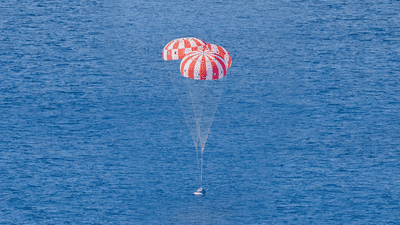


On December 11, the Artemis I mission concluded with the successful splashdown of the Orion capsule in the Pacific Ocean. The end of this mission came on the 50th anniversary of the Apollo 17 moon landing – the last time humans walked on the surface of the Moon. The Artemis program aims to land humans, including the first woman and the first person of color, on the lunar surface before the end of the decade.
Artemis I was uncrewed for the specific purpose of testing the Orion spacecraft in preparation for future crewed missions. In its 25.5 days in orbit, the spacecraft went further than any other human-grade space vehicle ever has. The tests were continuous and even re-entry was among them: Orion is the first spacecraft designed to carry humans to have performed a skip entry maneuver.
The spaceship entered the denser region of the atmosphere before bouncing out again, like a stone skipping on a lake. It then re-entered precisely where it needed to and with a lot less speed. This allowed the craft to go from about 40,000 kilometers an hour (almost 25,000 miles per hour) to 40 km/h (25 mph).

“Orion has returned from the Moon and is safely back on planet Earth,” Mike Sarafin, Artemis I mission manager said in a statement. “With splashdown we have successfully operated Orion in the deep space environment, where it exceeded our expectations, and demonstrated that Orion can withstand the extreme conditions of returning through Earth’s atmosphere from lunar velocities.”

In the coming days, the capsule will be taken to NASA’s Kennedy Space Center to remove payloads. For several months it will be studied in detail to make sure it is absolutely ready to carry astronauts around the Moon as part of the Artemis II mission, hopefully in late 2024.


