Technology
 PUBLISHED
 8
8


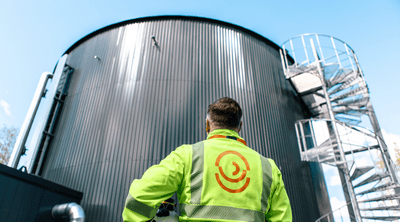


It's been one year since the world's largest sand battery has been quietly working away in Finland — and so far, so good. Polar Night Energy, the company behind the project, has announced that the system has met all performance targets and reduced climate emissions from the local heating network by 70 percent.
“The first year went even better than we expected. Commissioning was exceptionally smooth, and reliability has been excellent: there have been zero interruptions in district heating delivery. Our cooperation with Polar Night Energy has been very successful,” Mikko Paajanen, CEO of Loviisan Lämpö, the energy company that commissioned the project, said in a statement.
What exactly is a sand battery?
But what is a sand battery, we hear you ask? It’s essentially a large insulated steel cylinder, measuring 13 meters tall and 15 meters wide (42 by 49 feet), packed with 2,000 tonnes of crushed soapstone, a metamorphic rock prized for its exceptional capacity to absorb and retain heat.
Excess heat energy from renewable energy is pumped through a system of pipes around the rocky material, where it is held for hours, days, or even weeks. When energy is needed, it can be discharged. It's released in the form of boiling water, steam, or a blast of heated air, which can be used for industrial applications or water-based heating systems.
By turning excess green energy into storable heat, the sand battery helps to maximise the use of renewables and, in turn, reduce climate emissions from fossil fuels.
A year in the field
Located in Pornainen, a Finnish municipality just over an hour's drive from Helsinki, the battery went live in June 2025. Since then, it has demonstrated the ability to store approximately one month's worth of the town's heat demand in summer, and around one week's worth in winter – a level of success that the engineers are very happy with.
“We have demonstrated that the Sand Battery works as designed and can deliver significant emissions reductions in a cost-effective way. This is an excellent practical example of the energy transition, where energy production based on combustion is replaced with renewable energy,” said Liisa Naskali, Chief Operating Officer of Polar Night Energy.
Here are some of its other achievements:
- Efficiency above 85 percent
- District heating supply reliability: 100 percent
- Emissions reduction: 70 percent
- Biomass consumption reduction: 60 percent
- Oil consumption reduction: 100 percent
The Achilles heel of cleaner energy sources like solar and wind is that they only produce energy when the Sun shines or the wind blows. The sand battery helps solve this problem by capturing and storing energy for later use, bridging the gap between when energy is produced and when it's needed.
The potential benefits extend beyond the environment. By giving energy operators a buffer against supply disruptions and price swings, the technology offers some insulation from the volatility of modern energy markets.
“We wanted to reduce our dependence on a single fuel source. Recent developments have shown that volatility in energy prices is no longer an exception but the new normal. The Sand Battery provides protection against exactly these kinds of situations,” said Sauli Antila, Operating Partner at CapMan Infra.
“One of the most interesting performance indicators has been how much cheaper electricity we have been able to procure compared to average market prices. On average, we have been able to charge the battery at prices approximately 70–80 percent below the spot market average. In some months, the difference has exceeded 90 percent,” added Antila.
What comes next?
With its first year done, the next question is about scale. Can sand battery technology be replicated across larger, denser areas and energy networks? Is it a realistic long-term solution, or a promising but niche innovation?