


 Health and Medicine
 PUBLISHED


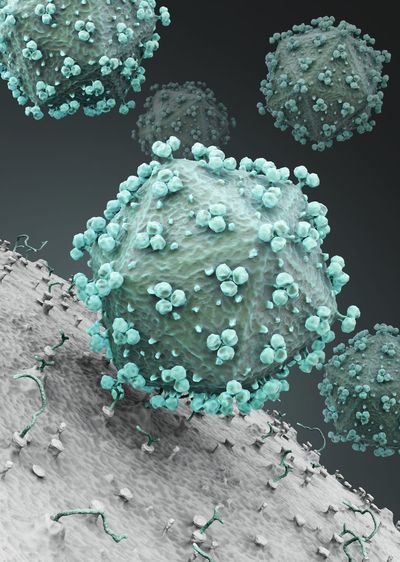


A single shot can spark the creation of bio-engineered immune cells that are capable of neutralizing the HIV virus in mice, according to a new study published in the journal Nature Biotechnology.
The research is still very much in its early days and has not yet been tested out in humans, but the researchers suggest their work could eventually help to pave the way toward the development of a one-time treatment or a vaccine for patients with HIV.
Scientists from Tel Aviv University in Israel used CRISPR–Cas9 gene editing to modify type B white blood cells. As opposed to modifying the B cells in a petri dish, the engineering took place within the body, carried out using viral vectors that code for broadly neutralizing antibodies against HIV-1.
Once the vectors were injected into mice, the researchers saw how the B cells became successfully edited to produce the desired neutralizing antibodies against the HIV virus.
“Until now, only a few scientists, and we among them, had been able to engineer B cells outside of the body, and in this study, we were the first to do this in the body and to make these cells generate desired antibodies,” Dr Adi Barzel lead study author from the Tel Aviv University, explained in a statement.
“The genetic engineering is done with viral carriers derived from viruses that were engineered so as not to cause damage but only to bring the gene coded for the antibody into the B cells in the body,” added Dr Barzel.
The team drew blood from the mice and found high levels of antibodies pumping around their systems. To make sure the antibodies were actually combating the virus, they tested them out in a petri dish at the lab and discovered they were effective in neutralizing HIV.
“Furthermore, if the virus changes, the B cells will also change accordingly in order to combat it, so we have created the first medication ever that can evolve in the body and defeat viruses in the 'arms race,” Dr Barzel added.
So far, so good, but there’s still a long way to go. The pipeline from a mouse study to a viable ready-to-go treatment is a very long process. With that in mind, the researchers appear to remain confident that this inventive approach has the potential to go somewhere.
“Based on this study we can expect that over the coming years we will be able to produce in this way a medication for AIDS, for additional infectious diseases and for certain types of cancer caused by a virus, such as cervical cancer, head, and neck cancer and more,” concluded Dr Barzel.


 1
1