Nature
 PUBLISHED
 1
1


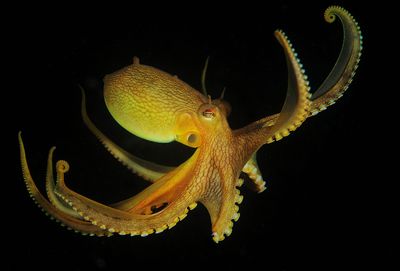


Octopuses, squids, and other super-smart cephalopods may soon receive the same legal protection in the US as other animals used in scientific research, such as monkeys and rodents.
Last month, the National Institutes of Health (NIH) put out a call for information to help shape their proposed guidelines for the protection of cephalopods used in lab research. They explained that cephalopods currently don’t fall under most animal welfare regulations, meaning researchers are not obliged to provide octopuses, squid, and cuttlefish with things like tranquilizers and anesthetics during studies.
In fact, cephalopods technically aren't even recognized as animals under the current rules.
One of the main hurdles to overcome is understanding that cephalopods have nervous systems that are structured in a profoundly different way to other animals considered intelligent, namely vertebrates like mammals and birds. For instance, octopuses have a donut-shaped brain in their head and eight other “mini-brains" in each tentacle.
Despite these fundamental differences, it’s evident that their nervous systems are highly complex. There is a mounting wealth of scientific evidence that shows these animals are incredibly intelligent, sensitive, and potentially exhibit self-awareness. Paired with this, a number of brilliant documentaries like My Octopus Teacher have helped to challenge many of the popular assumptions about the cognitive capabilities of invertebrates.
“A growing body of evidence demonstrates that cephalopods possess many of the requisite biological mechanisms for the perception of pain, such as nociceptors and a centralized nervous system. In addition, it has been shown that cephalopods exhibit adaptive learning, alter their behavior in response to noxious stimuli, and exhibit mammalian-like responses to anesthetics,” says the NIH request for information.
“However, the structural and functional organization of the cephalopod nervous system is very different from mammals, and additional research is necessary to fully understand cephalopod perception,” it continues.
A number of US politicians are also calling for the change. On October 11, Massachusetts Congressman Seth Moulton and 18 other federal lawmakers wrote a bipartisan letter to the head of the NIH and the Department of Health and Human Services (HHS) calling for better protections for cephalopods.
“Cephalopods are increasingly being used in laboratory research across the country, funded by taxpayer revenue. However, because they are currently not considered “animals” under the Public Health Service Policy, these incredibly intelligent animals are being denied basic humane treatment with no avenue for accountability,” the letter reads.
“The requested action would bring the United States in line with several other countries and government entities that already afford these species humane treatment when used in government-funded research,” it adds.
Indeed, a number of countries outside the US have recently upped their cephalopod protection in light of recent research, including Canada, New Zealand, Australia, Switzerland, Norway, and the European Union.
In 2021, the UK government included cephalopod mollusks – such as octopuses, squid, and cuttlefish – in its Animal Welfare (Sentience) Bill, officially recognizing them as "sentient beings.”