Culture and Society
 PUBLISHED




Got a comfort show you could rewatch every day? Is your workout playlist full of the songs you danced to in high school? Personally, I have a Friends quote for every occasion, my “continue watching” is exclusively ‘90s Star Trek, and you’ll wrest my skinny jeans from my cold, dead hands.
Nostalgia, in its many forms, is an indulgence lots of us enjoy. While some decry this as yet another “annoying” thing Millennials and Gen Z are obsessed with, nostalgia is an important psychological experience that comes with real benefits – and maybe some downsides too.
As a self-confessed “chronic rewatcher”, this topic hit home for me, so I went to the experts to find out more.
What is nostalgia anyway?
The term “nostalgia” was coined in 1688 by Swiss soon-to-be doctor Johannes Hofer. He noticed the intense feelings of homesickness experienced by foreign soldiers and domestic laborers and gave it a name that comes from the Greek words nostos, meaning homecoming, and algos, meaning pain.
It’s a sensory experience – it’s sight, it’s auditory, it’s smell, and it’s also taste.
Anjum Naweed
The idea of nostalgia being a kind of disorder persisted for some time, but the tides eventually started to turn. Carl Jung was one influential thinker who took a more positive view, considering it a way of reconnecting with our past and accessing the “collective unconscious” that he believed was shared between all people.
Our current understanding of the term was reached in the late 20th century. One researcher who helped lay the groundwork was sociologist Fred Davis, who recognized that people associated warmer feelings with nostalgia than they did with homesickness.
“A bridge to the past”
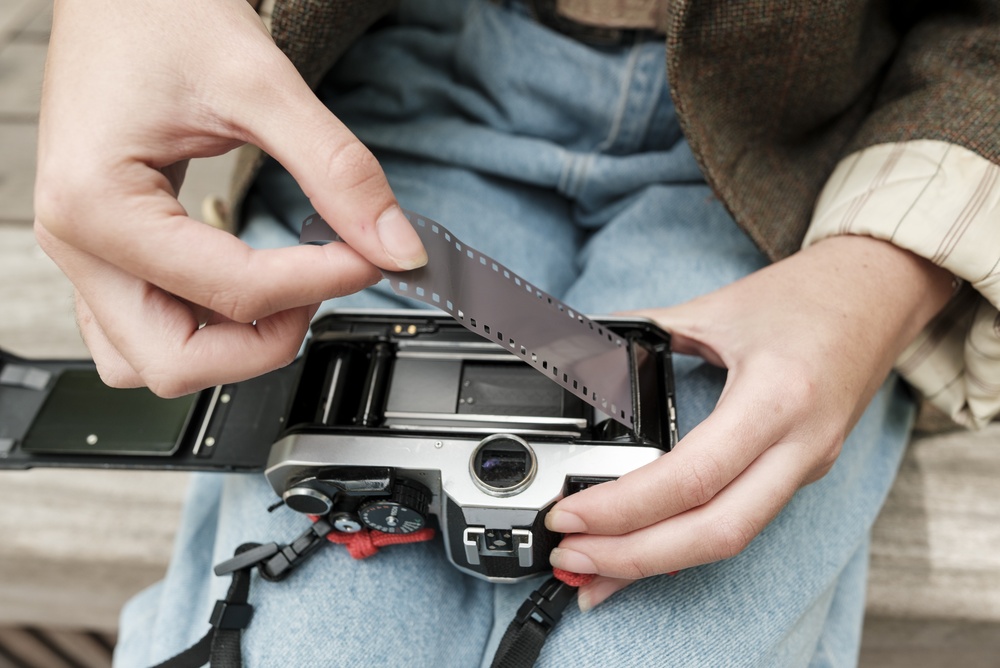
So many things can trigger nostalgia – it can be books, movies, the first notes of a beloved TV theme tune… but also scents, objects, or places. For the protagonist of Proust’s famous novel À la recherche du temps perdu, it was a madeleine.
“If you’ve got a collection, something you enjoy collecting, a lot of the time these do go back to early childhood, you know, important connections that we form,” Anjum Naweed, a professor at CQUniversity Adelaide in Australia, told me. “Maybe that’s also a bridge that you sort of formed to the past.”
“It’s a sensory experience – it’s sight, it’s auditory, it’s smell, and it’s also taste.”
Inspired by his own tendency to return to much-loved TV shows in times of stress, Naweed explored the power of nostalgia in a 2024 piece for The Conversation. Understanding its importance also helps explain why we may be drawn to share our nostalgia triggers with others.
“We form nostalgic experiences with other people at a time, but we also like to invite people into that experience, and it's part of our storytelling, because it's so meaningful, and because you've got that bridge from the past to the present,” Naweed told me.
I'm not sure if Gen Z is more nostalgic, but they are certainly more frequently exposed to old materials through social media compared to other generations.
Kuan-Ju Huang
Neuroscience research also shows us how nostalgia is tied up with our sense of self. “Nostalgia involves brain regions implicated in self-reflection, autobiographical memory, emotion regulation, and reward processing,” reads a 2023 review that appeared in a special issue of Current Opinion in Psychology.
This has been demonstrated in multiple studies using brain scanning methods like functional magnetic resonance imaging (fMRI) and positron emission tomography (PET).
Are we getting more nostalgic?
I’m not sure what your algorithm is like, but I can hardly scroll for 10 seconds without being reminded of some niche aspect of British culture from my 1990s childhood. My perception is that this trend is becoming ever more present in the generation after mine, but is that true?
In times of uncertainty, reminiscing about moments of order and safety can help restore a sense of control.
Kuan-Ju Huang
“I'm not sure if Gen Z is more nostalgic, but they are certainly more frequently exposed to old materials through social media compared to other generations,” Kuan-Ju Huang, a graduate student at Kyoto University, told me.
Naweed agreed. He told me that the ways we engage with our nostalgia triggers have evolved over time, but those triggers were just as present for older generations.
“I do think now that more and more people are searching for nostalgia, given a lot of the uncertainty that we're seeing in the world geopolitically as well,” Naweed added. “It did become apparent to me that the brain is really wired up to really draw on nostalgia as a form of a coping mechanism.”
And more of us than ever – including Huang – turned to nostalgia to help us get through arguably the most tumultuous collective experience of our lifetimes so far.
“During the COVID-19 pandemic, I noticed that myself and people around me were listening to a lot of old music and watching nostalgic videos. This made me wonder about the psychological mechanisms behind the phenomenon of ‘pandemic nostalgia’.”
This wondering led to a scientific study, published in 2023.
“At the time, I analyzed data from Spotify and human mobility data, which showed that people were more likely to listen to nostalgic music when they were unable to leave their homes to interact with others during the pandemic,” Huang continued.
The study concluded that people were using nostalgia as a coping mechanism, rather than simply a way to relieve boredom.
“This is why I continue to work on this topic – I want to understand how nostalgia exactly influences our social relationships and well-being,” said Huang.
What can nostalgia do for us?
We’ve explored a bit about how nostalgia can help us get through dark times – sometimes without us even realizing it. Naweed described it as “a protective mechanism that can kick itself in to help us cope but also help us survive.”
“I do think that there's this kind of dormant, vestigial nature of stored information in our psyche, if you will, that perhaps is brought forth when you need it. Sometimes it might just be under extreme conditions. […] And I think COVID was a global event that brought to the surface, for many people, their important nostalgia detections they didn't know they had.”
We pick and choose. The memory process not only is selective, but it also distorts to some extent. We do idealize things on occasion.
Dr Krystine Batcho
Huang agrees. “In times of uncertainty, reminiscing about moments of order and safety can help restore a sense of control. Nostalgia is a powerful emotion, serving important psychological functions when individuals are in an undesirable mental state.”
Huang’s latest paper suggests that another way in which nostalgia is helpful is in maintaining our social relationships.
“Reflecting on shared past experiences is important for long-term relationships, as it can help individuals build a sense of connection and commitment to their relationship. Previous research has shown that nostalgia can promote feelings of warmth and connection, but my research shows that it can have a real impact on our social network, including the number of close friends.”
Huang and co-author Ya-Hui Chang from the University at Buffalo found that people who value nostalgia appear to be more aware of the need to nurture strong interpersonal relationships and thus have more success at maintaining them.
As Huang notes, other research backs up the idea that nostalgia helps with social bonding. “Nostalgia makes people feel socially connected. Nostalgia-induced social connectedness breeds meaning, self-continuity, optimism, and inspiration,” reads a 2023 review.
The concept of self-continuity – the way nostalgia helps us understand our current selves by keeping open a highway to the past – was also suggested in one 2019 study to be the mechanism by which nostalgia promotes meaning in life, another important psychological benefit.
Are there any downsides?
You can always have too much of a good thing. Literature abounds with warnings about what can happen to those who spend too much time dwelling on the past and ignoring the present.
Naweed theorized that this may be why some are skeptical about those who revel in nostalgia.
It's very fundamentally a human thing, I think, to reminisce and think and reflect in both the past and the future.
Anjum Naweed
“If you end up spending a lot of time […] staying in the realm of the past, that will create more loneliness, more detachment. […] I think that the stigma associated with [nostalgia] might be that you've come across people, or you've seen people, or you've overemphasized this notion of [losing] a sense of reality, [losing] touch with the present.”
If you spent all day every day hunkered down in front of your comfort show, at the expense of doing anything else, that would clearly indicate that it’s become an unhealthy habit. But Naweed believes nostalgia is much more often a conduit to the past rather than a gateway to getting lost in it.
What’s more, he told me that he’s equally curious about those who refuse to engage in nostalgia altogether.
“What is it you’re shutting yourself off from? Is it because nostalgia is being misconstrued for escapism, and escapism is seen as a negative thing? […] It could be that that's a reaction to perhaps trauma or something else in childhood, or other years that they don't want to sort of revisit, or maybe they just don't really understand their relationship with [their triggers].”
“I don't know,” he continued, “but there is the idea of, if you cut yourself off from what is a protective mechanism, where else are you getting your protection from?”
Of course, when we’re talking about a concept so inextricably linked with memory, we have to recognize that memories play tricks.
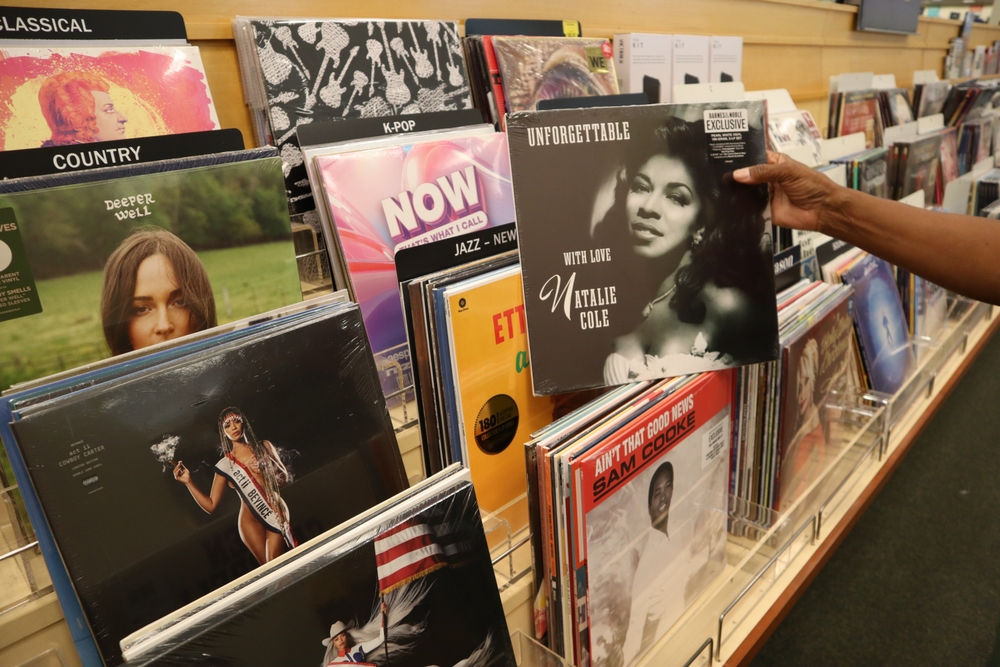
Books, movies, objects, and places from our childhoods might remind us of a simpler, more carefree time, and that can certainly be beneficial in the face of adult stresses, but memory is fallible – for instance, research has shown there’s a good chance you’re misremembering 9/11.
But it’s not even just that we could be mistaking key details of our own lives. We can also fall into anemoia, a new word coined by John Koenig for his project The Dictionary of Obscure Sorrows. It describes a yearning for a time that you didn’t personally live through – think Gen Z fans of shows like Stranger Things wishing they had had a (largely imaginary) 1980s childhood.
According to psychologist Dr Krystine Batcho, who discussed what she called “historical nostalgia” on the Speaking of Psychology podcast, this is different from personal nostalgia.
“Historical nostalgia, [my research suggests], is more likely triggered by dissatisfaction with the present,” Batcho said.
Every period in human history had its share of problems; but media portrayals and family lore can lead us to romanticize the past.
“We pick and choose. The memory process not only is selective, but it also distorts to some extent. We do idealize things on occasion,” Batcho continued.
A recent example of this is the idea of lockdown nostalgia – not using nostalgia to cope with COVID-19 lockdowns, as we explored above, but actually reminiscing fondly about the lockdowns themselves.
“It makes sense […] that some people, especially those for whom the spring of 2020 wasn’t all that bad in the first place, have a romanticized memory of it,” writes Paul Rogers for WebMD. Presumably, that’ll be the people whose main worry was their sourdough starter, rather than how they were going to get three kids to engage with Zoom school and still get through that big presentation to the CEO.
But despite these potential pitfalls, based on her research, Batcho still concluded that nostalgia is an overwhelmingly beneficial thing for most of us.
“My argument is that it's almost never, at least the research suggests it would be extremely unlikely for someone to want to remain in the past,” she explained.
“In fact, when we revisit our memories, we try to remember how other people in our lives solved problems in the past and then use that as a role model for how we want to solve the problems we're experiencing today so it's generally healthy.”
My conversation with Naweed ended on an equally optimistic note: “It's very fundamentally a human thing, I think, to reminisce and think and reflect in both the past and the future,” he said.
“I do believe that based on what I've read and seen and through my own lived experience, and also all those that contacted me after my piece went out, that it resonated – and it […] taps into sort of our core sense of who we are.”
So, keep rewatching those shows, listening to those songs, and collecting obscure pieces of memorabilia if that’s your thing. I know I will – it’s psychologist-approved.
This Curious Questions feature first appeared in Issue 34 of our digital magazine CURIOUS. To access exclusive CURIOUS content first, and receive the quarterly digital magazine, become an All Access Member.