Health and Medicine
 PUBLISHED
 3
3


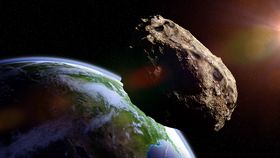


A staggering new story from The Express claims that coronavirus has most likely come to Earth on a meteorite. Speaking to astrobiologist Professor Chandra Wickramasinghe, of the Buckingham Centre for Astrobiology, the web post claims that a fireball that burnt up in northern China last October is the most likely source, despite there having been no reports of meteorites found on the ground.
Panspermia is the theory that organisms trapped in meteorites can establish themselves on a planet they crash into, provided the meteorite doesn't burn up completely and the organism can withstand the conditions on the ground. These meteor-surfing extremophiles are theorized to be able to survive the harsh conditions of space, something that has only so far been seen in tardigrades within the animal kingdom. But what about viruses?
“The most compelling evidence that SARS-CoV-2 didn’t come from a meteorite is that it is so closely related to other known coronaviruses,” Dr Dominic Sparkes, a specialist in infectious diseases, told IFLScience. “It’s closely related to the SARS (severe acute respiratory syndrome) virus that caused an outbreak in the early 2000s and the MERS (Middle Eastern respiratory syndrome) virus which still causes disease currently.”
For the SARS-CoV-2 virus to have come from a meteorite, it would have to have evolved in perfect tandem to these known coronaviruses to share so many of their characteristics. Meteorites are often fragments of asteroids that have remained unchanged for billions of years, so it would seem immensely unlikely that, suspended in the harsh conditions of space, a virus could have evolved to look exactly like two terrestrial coronaviruses.
Furthermore, these closely related coronaviruses were both linked to animal-to-human transmission. “SARS was found to be the result of bats transferring virus to civet cats which transferred on to humans, while MERS is known to be passed on to humans from camels,” said Dr Sparkes. “It therefore is far less of a leap to assume the closely-related SARS-CoV-2 virus has been passed on to humans in the same way.” Especially when you consider the point of origin is linked to a market selling the meat and carcasses of wild animals.
But, for the sake of argument, let’s say somehow SARS-CoV-2 did independently evolve on a rock in space hurtling around the universe. For this meteorite to reach China it would first have to enter our atmosphere. Meteorites that don’t disintegrate on entry typically reach temperatures of about 1,648°C (1,198°F). Could our space pathogen survive this journey?
“There are thermophilic bacteria, named because of their ability to survive at high temperatures, but usually these temperatures range from 40-122°C (104-252°F), not 1,648°C,” Dr Sparkes said. “The most hardy pathogen we know are prions. Prions are transmittable misfolded proteins which are very difficult to eradicate.”
Prions cause Creutzfeldt-Jacob disease (CJD), a rare and fatal neurodegenerative condition causing rapidly progressing brain damage. Symptoms include loss of memory, balance, and coordination as well as vision and speech problems with progressive loss of brain function and mobility. Most sufferers die within a year of diagnosis.
Precautions taken with confirmed cases of CJD are such that no one ever re-uses the instruments used to perform medical procedures because of fears that conventional heat treatment and autoclaving won't work. “Having said that, our autoclaving procedures increase heat to 180°C (356°F), which is sufficient to kill all other known pathogens, but not significantly higher,” Dr Sparkes continued. “I think it’s extremely unlikely that even a prion would survive at temperatures of above 1,000°C (1,832°F) as it would likely denature the protein, but I’m not sure whether this study has been done.”
Occam’s razor states that entities should not be multiplied needlessly, that is, researchers should avoid 'stacking' information to prove a convoluted theory if a simpler explanation fits the facts. A virus closely related to two other viruses that spread from animals to humans is far more likely to have itself spread from animals to humans than it is to have come from space. Running the headline “Coronavirus came from METEORITE” might be one small step for a questionable newspaper, but it’s a giant leap for fake news.
Stick to the facts as we explore how effective face masks are against SARS-CoV-2, and find out what this virus actually looks like.