Technology
 PUBLISHED
 2
2


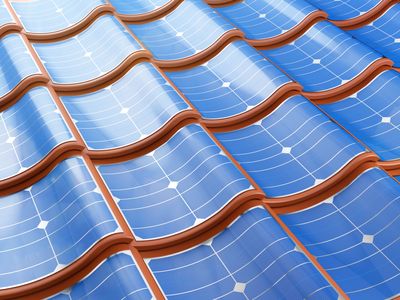


Record efficiency in CIGS solar cells has been independently verified, showing there is still life in the once-popular technology that has been shaded in recent years.
Today, the vast majority of photovoltaic systems are silicon-based. However, silicon cells are approaching their maximum efficiency, and require relatively high temperatures to produce, creating a floor in cost and embedded energy that is hard to get below. The much newer perovskite technology is improving at an astonishing rate, but doubts remain about perovskite cells’ longevity.
Consequently, some researchers are keen to keep options open for an alternative approach. Moreover, stacking different types of solar cells on each other leads to efficiencies none could achieve on their own. Both of these keep CIGS relevant as a potential part of fossil fuels’ replacement, despite its decline in market share since the early 2000s.
The letters in CIGS stand for copper, indium, gallium, and selenide, a combination of which are coated on an ordinary sheet of window glass, along with silver and sodium. A team at Uppsala University created one such cell that outperformed predecessors using several innovations, including adjusting gallium concentrations in different parts of the cell.
This composition sounds expensive – some of those metals are quite pricey. The fact they need to be treated with rubidium fluoride, a molybdenum layer placed behind them, and a transparent layer placed in front, doesn’t improve the situation.
However, these types of cells are not called “thin film” for nothing. The sheets are so fine that the quantities of metals required should not be prohibitive compared to silicon.
If CIGS is to be worth using, however, it needs efficiency at least close to competing technologies. For decades, solar engineers were more concerned about getting production costs down than improving efficiency, but solar cells are now so cheap that efficiency gains have been prioritized in recent years.
Standard commercial panel efficiencies have more than doubled over a decade, allowing far more energy to be generated from rooftops with limited space, as well as easing concerns that utility solar will compete with agriculture for land.
Uppsala University researchers held the record for CIGS efficiency in the 1990s, but that feat had been exceeded for decades. Recently, however, they produced a cell that their own tests suggested was closing in on 24 percent efficiency. Independent testing by the Fraunhofer Institute for Solar Energy Systems has now produced a value of 23.54 percent.
“The measurements that we have made ourselves for this solar cell and other solar cells produced recently are within the margin of error for the independent measurement,” Uppsala University's Professor Marika Edoff said in a statement.
This reclaims the CIGS crown, beating the previous record set by Solar Frontier of Japan by 0.29 percent, although still behind silicon’s 27.6 percent and perovskite’s 26.1.
However, CIGS doesn’t need to beat silicon’s efficiency to matter. Different cell technologies work best at capturing different parts of the spectrum of sunlight that reaches Earth. Tandem cells are topped by a layer that is good at capturing blue to ultraviolet, and relatively transparent to longer wavelengths, with another layer more suited to capturing red light below. These can be more efficient than any single-layer cell – with a record currently standing at 33.9 percent.
“Our study demonstrates that CIGS thin-film technology is a competitive alternative as a stand-alone solar cell. The technology also has properties that can function in other contexts, such as the bottom cell of a tandem solar cell,” said Edoff. CIGS’s high reliability also gives it an advantage over some other candidates.
Inevitably, tandem cells are more expensive per unit area, and currently per unit of energy as well. Consequently, they are only used in cases where efficiency is much more important than cost, such as powering satellites. However, if improvements continue across multiple technologies, tandem, or even triple or quadruple cells, could become much more widespread.
The study is published in Nature Energy.