Space and Physics
 PUBLISHED
 1
1





Amino acids, the building blocks of proteins and crucial to life on Earth, have been found in a variety of space environments, including asteroids. While we can’t live without them, it doesn’t mean they are formed exclusively by living organisms, which makes it difficult to say whether their presence constitutes evidence of life beyond our planet. So, scientists have devised a new way to work out the source of amino acids and other organic molecules.
According to the new research, the distribution of certain molecules obeys a statistical principle that can be detected. This study is the first to demonstrate just that. They found that amino acids are consistently more diverse and more evenly distributed when they have a biological source. The opposite is true for fatty acids. Abiotic sources create more evenly distributed fatty acids than living beings.
“We’re showing that life does not only produce molecules,” co-author Fabian Klenner at UC Riverside said in a statement. “Life also produces an organizational principle that we can see by applying statistics.”
The team used a variety of sources to test this approach. From microbes to soil, from fossils to meteorites, and even lab-made samples. The living and nonliving chemistry had distinct distributions, and this was even seen in fossilized dinosaur eggshells.
This is an exciting development for Mars in particular. We have found a single sample – the Cheyava Fall rock – that so far has registered on NASA’s Confidence of Life Detection (CoLD) scale.
It is still firmly on the first step: detecting a possible signal. The next three steps are ruling out contamination, making sure the biology is possible, and ruling out a non-biological explanation. This new method could help with step four.
“Any future claim of having found life would require multiple independent lines of evidence, interpreted within the geological and chemical context of a planetary environment,” Klenner said.
“Our approach is one more way to assess whether life may have been there. And if different techniques all point in the same direction, then that becomes very powerful.”
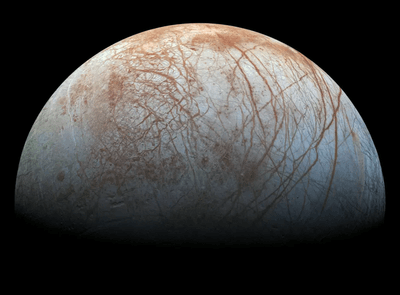
It’s not just about Mars. NASA and the European Space Agency (ESA) have missions to the icy moons of Jupiter, and ESA wants to land on Saturn’s Enceladus and sample its ocean. This kind of approach might be very important to work out the origin of organic molecules found on these distant icy worlds.
A paper describing these findings is published in the journal Nature Astronomy.