Health and Medicine
 PUBLISHED
 4
4




Tinnitus can be a desperately exasperating condition, but there could hope on the horizon for the millions of people currently suffering from the chronic ringing in their ears.
It comes in the form of an experimental device that uses precisely timed blasts of sound and electrical pulses to “reset” the responsible nerve activity in the brain. The remarkably research was recently published in the journal Science Translational Medicine.
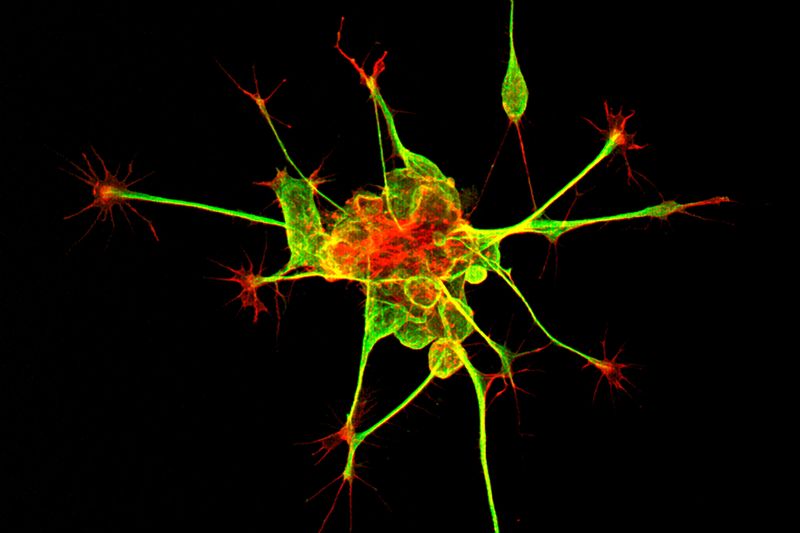
Scientists have been trying to get to the bottom of what causes chronic tinnitus for years. Despite appearing to be a “mechanical problem” with the ear, research has shown that it’s most likely to do with brain activity, especially among the fusiform cells that help us gauge where a sound is coming from and phase out background noise.
“The brain, and specifically the region of the brainstem called the dorsal cochlear nucleus, is the root of tinnitus," Susan Shore, a professor at the University of Michigan Medical School and leader of the research team, said in a statement. "When the main neurons in this region, called fusiform cells, become hyperactive and synchronize with one another, the phantom signal is transmitted to other centers where perception occurs."
"If we can stop these signals, we can stop tinnitus. That is what our approach attempts to do, and we're encouraged by these initial parallel results in animals and humans."
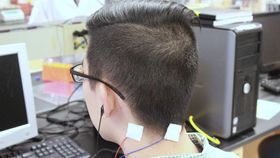
The device works through an alternating burst of two stimuli during a daily 30-minute session. First, sound is played into the ears through a specialized earphone. The audio stimulus is then precisely alternated with light electrical zaps delivered through electrodes on the cheek or neck. This tickles the fusiform cells to change the rate at which they fire, thereby "resetting" the nerve cells back into normal activity.
The first part of the research was carried out on guinea pigs (yep, actual guinea pigs, not humans), but it was also part of a small double-blind clinical trial involving 21 adult humans. After four weeks of daily use of the device, most of the humans declared that the severity of the phantom sounds had dramatically decreased and two even said their tinnitus was totally eradicated. No patient experienced any adverse effects or worsening of symptoms.
"We're definitely encouraged by these results, but we need to optimize the length of treatments, identify which subgroups of patients may benefit most, and determine if this approach works in patients who have nonsomatic forms of the condition that can't be modulated by head and neck maneuvers," Shore added.