Humans
 PUBLISHED


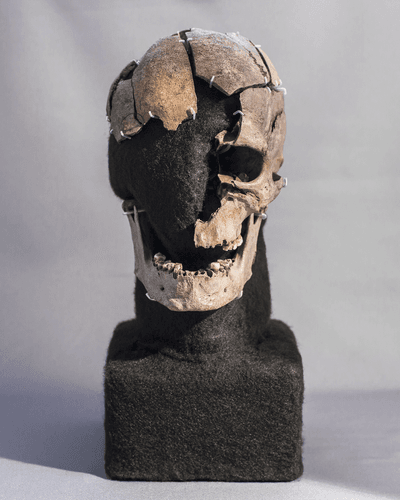


It is hard to know the details surrounding the lives of prehistoric people, especially when their remains are recovered in unusual places – and especially when they died under mysterious circumstances. One example is the so-called “Vittrup Man”, a partial skeleton recovered from a peat bog in northern Denmark during the early 20th century.
For years, the identity and background of this mysterious and unfortunate man was a mystery, though it was clear he had met a violent end before disappearing into the bog. But now, with the help of advanced genetic analysis, researchers have unlocked fresh details about this man’s past.
The coldest of cold cases
As far as we know, sometime around 5,200 years ago, an unknown man found himself entangled in some sort of situation that resulted in him being murdered and his body left in a bog in what is now Vittrup, Denmark. The man’s remains were first recovered in 1915 and consisted of a right anklebone, a lower left shinbone, his jawbone, and parts of his skull. Intriguingly, and like a classic “whodunnit?”, the man’s body was recovered alongside a wooden club. The plot thickens.
Previous analysis concluded that the Vittrup Man probably died after being beaten over the head around 8 or so times, making his death a murder mystery that dates back to around 3100 BCE to 3300 BCE.
So who was the Vittrup Man and what led him to this grisly end? Dozens of other Neolithic human remains similar to his have been found in bogs across Europe. These “bog bodies”, as they are known, are often remarkably well preserved due to the conditions that sealed them away for centuries.
Archaeologists think these people could have been killed as part of a ritual sacrifice. In many cases, the bones show malformations that may have marked the individual as significant in some way. However, the case of Vittrup Man appears slightly different from other examples because of the extremely violent nature of his death.
A traveler from overseas
DNA analysis of Vittrup Man’s remains has helped shine a light on who he was, though the details of his life remain unclear. Firstly, his genetic signature was distinct from other remains found within that local area. So Drs Anders Fischer and Karl-Goran Sjögren, and colleagues, decided to take a closer look.
Through an analysis of his tooth enamel, which contained traces of strontium, carbon, and oxygen isotopes, the scientists were able to conclude that Vittrup Man had grown up along the coast of the Scandinavian Peninsula. To corroborate this, the team found a close match between his DNA and Mesolithic people from Norway and Sweden.
At some point in his young adulthood, Vittrup Man probably became a farmer. How do we know this? Well, isotope and protein analysis of his teeth and bones indicated a shift in diet from coastal food (marine mammals and fish) to farm foods (sheep or goat, cereals, and dairy) as he aged.
It seems the previously mysterious man was also originally part of a northern foraging society, but later relocated to a farming society in Denmark. This may have happened naturally, as part of a broader migration towards Denmark, or, as the team suggests in their study, he may have been a trader or captive who was integrated into the local society.
Regardless of the details of how he ended up in Denmark, this new analysis indicates that there was a more detailed and complex level of exchange between Mesolithic and Neolithic societies living in Europe at this time.
As the authors explained in a statement, “To our knowledge, this is the first time that research has been able to map a north European inhabitant’s life history in such a high degree of detail and in such high distance of time.”
The study is published in PLOS ONE.


 1
1