Technology
 PUBLISHED
 2
2


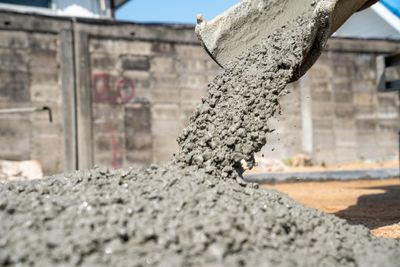


Concrete is pretty much the most common construction material, but it is far from being the most green option. As such, scientists and engineers have been searching for alternatives that are more environmentally friendly, and now they may have a solution: cement-free concrete.
The global production of cement, a fundamental component of concrete, is the third-largest source of anthropogenic carbon emissions in the world. However, in recent years, various alternative methods for creating greener concrete have emerged. Some have included using industrial waste and steel slag to lower CO2 additives in the mixture, while others have suggested using spent coffee grounds to create stronger concrete with less sand.
But now one company has developed a method to create concrete without cement that can be used in commercial businesses.
The concrete is potentially carbon-negative and may prevent around 1 ton of carbon emissions for every ton used. If this is true, the cement-free binder will be a significant alternative to Portland cement. As reported by BGR, the new concrete also meets all the industry standards of traditional cement concrete, meaning there is no trade-off in terms of strength and durability.
Although it is still early days, the situation appears promising. C-Crete Technologies, a materials science company and the patent holders of the new concrete, have used around 140 tons of the new cast-in-place (pourable) concrete in new construction projects.
In September 2023, the company received nearly $1 million, quickly followed by another $2 million, from the US Department of Energy to further develop its technology. It has also received various other awards that are helping it expand its operations.
The wider introduction of cement-free concrete into future construction projects has the potential to drastically change the industry's impact on the environment, and while C-Crete appears to be in the minority when it comes to experimenting with these new options at this scale, there is certainly potential that we will see others joining its ranks in the coming years.