Health and Medicine
 PUBLISHED




The discovery of a new protein has real potential to save thousands of people’s lives.
Ovarian cancer is known by many as a “silent killer". The American Cancer Society estimates that 22,240 women will receive a new diagnosis of ovarian cancer this year. About 14,070 of them will also die from the disease.
Early symptoms are usually hard to spot or are fairly nondescript, such as indigestion and discomfort in the lower abdomen, meaning it’s difficult to diagnose the disease early and treat it before things get worse.
“The majority of diagnoses for ovarian cancer come during stage three, when the cancer has spread to other areas of the body, which has a direct impact on the chances of patients’ surviving,” Dr Barbara Guinn, a cancer immunologist at the University of Hull in the UK, explained in a statement.
Now, scientists have identified a biomarker protein that’s found within the tissues of people still in the early stages of the disease. The research, led by a team at Hull, was presented at the British Science Festival earlier this week. Their preliminary research has found the biomarker was detectable in 18 percent of stage one cancers, 36 percent of stage two cancers, and 17 percent of stage three cancer samples.
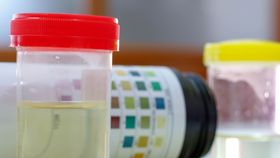
The detection of proteins in urine has proved a great way to diagnose other cancers promptly and accurately, so the researchers are hoping next to find out whether the biomarker is present and easily detectable in people's urine. Although this research is very much in its early days, the hope is that scientists will eventually be able to utilize the newly identified protein to create a urine test that's non-invasive, low-cost, and effective.
Provided all of this goes to plan, the researchers estimate that this could really make a difference when it comes to saving lives.
“A stage three diagnosis can mean survival rates as low as 20 percent, but with early detection, that can be increased dramatically to around 90 percent,” added Dr Guinn.
Ovarian Cancer Action, a UK-based research charity, was cautiously optimistic about the “exciting” breakthrough. In a blog post, they explained: “While many of these studies show exciting early promise, identifying proteins in tissue samples in a laboratory is far simpler than identifying these cells in the human body. Until a diagnostic test has gone through the full stages of testing in animals and people, we cannot be certain that it works.”