Health and Medicine
 PUBLISHED
 1
1


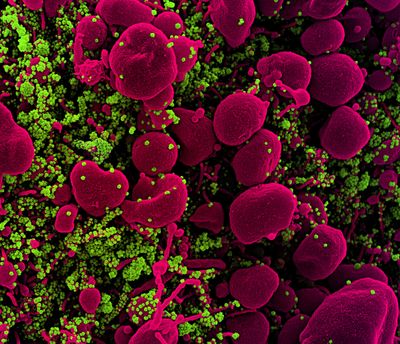


Universal vaccines offer the hope of future-proof disease prevention, protecting us against the diseases we’re facing now and their future evolutions in one fell swoop. New trial results show how this vision is slowly becoming reality, with a fully AI-designed vaccine platform that doesn’t even require a needle.
Viruses mutate. Flu researchers know this perhaps better than anyone. Every year, the global scientific community comes together to design a seasonal flu vaccine they hope will best protect the population in the coming winter – and the following year, they have to do it all over again.
SARS-CoV-2 is another virus that’s always evolving new variants, as we’ve all observed in real time during the Alpha, Delta, and Omicron eras of the COVID-19 pandemic.
Everywhere you look in the virus world, this invisible, never-ending arms race between virus and vaccine scientist is playing out.
The answer? Universal vaccines that somehow grant us protection against whatever future variants a virus can throw at us. You’ve got to find the parts of viruses they can’t alter as easily and prime the immune system against those, to make a vaccine that, to take flu as an example, protects against every seasonal strain for years to come.
That all sounds fabulous in theory, but it’s very difficult to achieve in practice.
“There’s a bunch of things that are hurdles,” Dr Florian Krammer, a professor in vaccinology at the Icahn School of Medicine at Mount Sinai, told IFLScience’s The Big Questions podcast. “One is […] the need to update the current vaccines every year because the strains change, but there’s a second reason why this needs to be updated – the immunity is relatively short-lived and [for flu vaccines] it wanes often within six to 12 months.”
“What you would want to have is something that’s similar to maybe the MMR vaccine, where you might give a bunch of doses to kids and then they’re good for the rest of their life. That’s ideal. That would be great.”
Now, the latest contribution to this quest is a study reporting promising early trial results for a computer-designed vaccine against Sarbecoviruses – the subgenus that includes SARS-CoV-2.
Theirs, trial chief investigator Professor Saul Faust said in a statement, is a “new class of universal vaccines” that really are “future-proofed.”
“They not only protect against many variants simultaneously, but potentially against related viruses that haven’t yet emerged and spilt over to humans.”
An AI “super-antigen” and a microfluid jet
The team behind the new vaccine leveraged AI technology to design a “super-antigen” – the active component of the vaccine that the immune system mounts a response to. Using the wealth of genetic data that has been collected on Sarbecoviruses by labs across the globe, machine learning allowed them to design an antigen with features common across the whole group of viruses – both those we know about and those that are yet to emerge.
What that means is that the vaccine should offer protection against the original SARS virus that caused the 2003-4 outbreak, SARS-CoV-2 that causes COVID-19, and any future related coronaviruses that might start causing infections in humans.
“We’ve overcome the problem of traditional vaccines, which have limited protection. It means we can escape the constant cycle of chasing the virus variants circulating in humans and updating the vaccines to try to catch up, like a dog chasing its tail,” said Faust.
For this small, first-in-human phase I study, 39 volunteers between the ages of 18 and 50 were vaccinated with the AI-designed super-antigen.
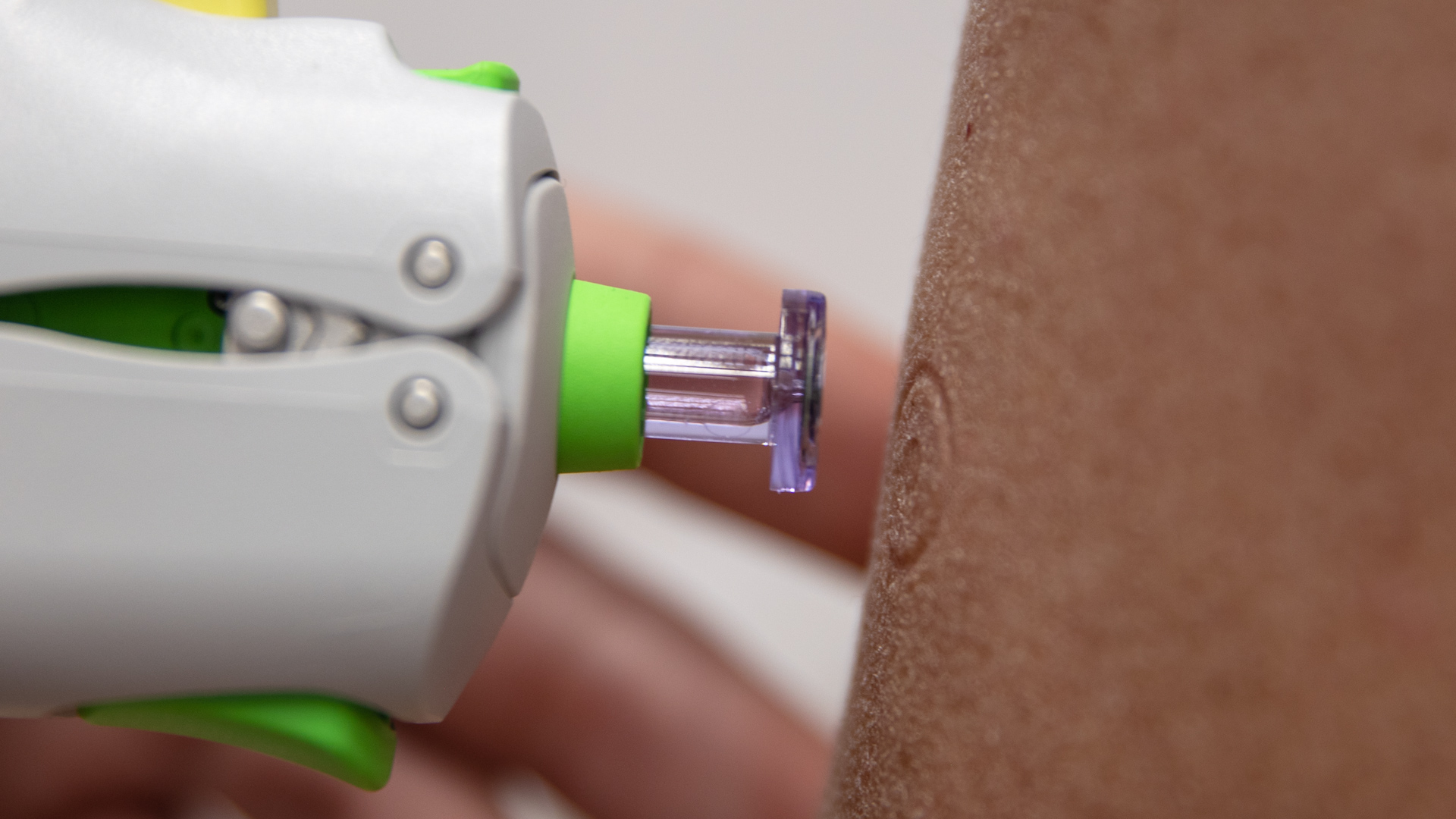
The authors say their platform could be applied to most vaccine delivery systems, but they chose to use a DNA vaccine administered via a microfluid jet. That means no needle is required, which is great news for those with phobias.
The trial ran between December 2021 and September 2023, meaning some of the participants were receiving their vaccines during peak times for certain circulating Omicron COVID variants. The design of the trial stipulated that participants would receive two vaccines in total, and different doses were trialled in different groups of participants.
Overall results showed that the vaccine was well-tolerated with few reported side effects.
Previous studies in animals suggested that the vaccine had the potential to elicit a good immune response. In humans, these results were mixed.
The authors explain that there were several limitations, such as the fact the study was being conducted in the middle of a pandemic and there was a lot of variability in participants’ prior vaccine and infection status.
They also explain that DNA vaccines – which are not commonly used compared to other types of vaccines – have typically produced weaker immune responses in humans versus the mRNA vaccines we use against COVID-19 at the moment.
So, while this specific vaccine might not quite be there yet, the authors say the trial results “support the underlying design concept and inform further optimization of this platform for next-generation, broadly protective coronavirus vaccines.”
“Viruses like influenza, coronaviruses and the Ebola group are evolving continuously and by the time vaccines are rolled out, they may be poorly matched – the current ‘reactive’ vaccine system struggles to keep pace,” said Faust.
“If we can develop and clinically advance this new class of vaccines before a virus outbreak begins, millions of lives could be saved, lockdowns avoided and the economy preserved.”
The study is published in the Journal of Infection.