Technology
 PUBLISHED
 1
1


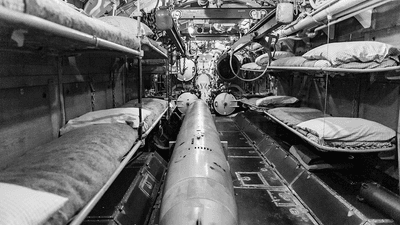


On April 14, 1945, Nazi U-boat commander Karl-Adolf Schlitt was forced to surface and then flee from Allied aircraft fire, due to improper use of the submarine's toilet.
The advantage of a submarine, you'll be shocked to hear, is that they can evade the enemy by going underwater for long periods of time. Or at least, they can remain underwater for long periods of time if you've got the toilet situation figured out.
Allied submarines at the time stored up their crews' various waste products (poop and pee) in septic tanks, which would be discharged when the submarine next surfaced. This was pretty efficient, but it wasn't ideal, with the holding tanks taking up a reasonable amount of space in an already cramped submarine.
The Nazis, meanwhile, flushed their waste directly into the sea. Though this saved on space, it had a much bigger drawback. The toilets could only be discharged in shallow water. In deep water, the increased pressure outside the submarine would push water back into the toilet and flood it. During long periods of submersion, crewmembers would have to go in buckets, essentially taking an already grim living situation and adding festival toilets to it.
But as the war went on, engineers worked on an improved system that would be able to expel the crew's waste whilst still in the ocean depths. The toilet sent the crew's waste through several chambers before it came to a pressurized airlock. The pee and/or poop were then blasted out of the submarine using compressed air.
As well as being fun to fire your poop into the ocean like a torpedo, the system meant that the submarine would have less reason to surface, where it is vulnerable to the enemy. It had its tradeoffs though. Each submarine had to have a crewmember who was trained in operating the toilets, who had to open and close valves in the exact order required to safely expel the waste.
Less than five months before the end of World War II, Karl-Adolf Schlitt was off the coast of Peterhead, Scotland, when he decided to use the toilet without the help of the toilet consultant. The 27-year-old Schlitt was only eight days into his combat patrol, the first he had taken in the war, and it was not a great first month on the job.
Schlitt messed up on his flush attempt and called on an engineer to help rectify the situation. But the engineer turned an incorrect valve, and as a result, the sewage and a large quantity of seawater made their way into the ship.
As anybody who knows anything about submarines knows: water outside good, water inside bad. The water began to leak through the floor, reaching the U-boat's large internal batteries, where the two got together to create a nice big cloud of deadly chlorine gas.
Schlitt ordered the submarine to surface, where they were soon spotted by Allied aircraft. The crew attempted to clear out the chlorine gas, but they were now doing so under heavy fire. The submarine was damaged too much to attempt another dive, and so, with no time to say "I'd leave it a minute if I were you", the captain ordered the crew to abandon ship.
Schlitt survived, living until the age of 90, but others weren't so lucky. One crewmember died during the firing, while three more drowned whilst trying to make it to shore. The other 46 were captured by rescue boats, or when they made it to land. While not a huge loss of life in comparison to other battles of World War II, it's a pretty large body count for a toilet mishap.