Space and Physics
 PUBLISHED
 18
18




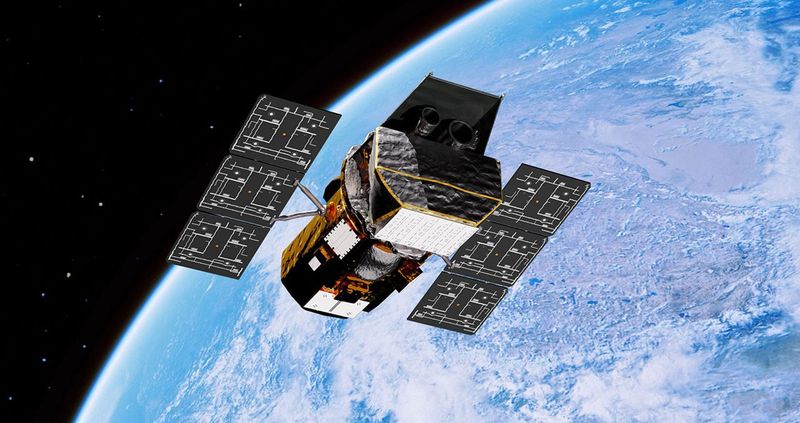
As the ISS hurtles towards the end of its long life, NASA wants to begin researching a spacecraft that will take it down from space and guide it on its way to crashing into the sea. The plan would involve giving it a light “space tug” out of orbit at the perfect time for it to enter the atmosphere and touch down at Point Nemo, the furthest location away from any land in the Pacific Ocean.
First reported by Space.com, the plan was revealed in the White House’s annual budget release recently, in which the $27.2 billion allocation for NASA included a $180 million allocation "to initiate development of a new space tug". It would take place in 2030, when the operational lifespan of the ISS officially ends.
The money would go towards a specialized spacecraft for the job, so NASA does not need to rely on Russia’s Progress cargo spacecraft to deorbit the ISS for them. It may still be the leading plan, but the agency wishes to have some redundancy just in case.
While $180 million will get the ball rolling, they’re going to need quite a bit more.
"A cost estimate we had was a little short of about $1 billion," said Kathy Lueders, NASA's human spaceflight chief, during a press conference, Space.com reports.
"Our goal is to go out with an RFP [request for proposals], and then, obviously, when we get the proposals, then we're hoping to get a better price than that. But this gives us a healthy start in '24 to get that critical capability onboard."
The ISS would (hopefully) touch down in the Oceanic pole of inaccessibility, otherwise known as Point Nemo, which is a location far out in the Pacific Ocean that is described as the most difficult-to-reach spot in the ocean.
Point Nemo is the farthest point from land possible, which makes it an ideal spot to aim a speeding fireball at. As a result, Point Nemo has essentially become a “spacecraft cemetery” for deorbited junk – and in 2030, there’s a good chance the most iconic spacecraft of all time could finally rest there.