Space and Physics
 PUBLISHED



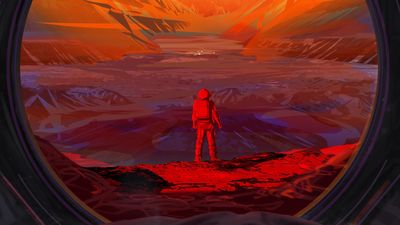


NASA hopes to have astronauts on Mars in the near future. It is not going to be an easy journey and being on another world will be extremely dangerous. The space agency wants to be there as prepared as possible. And part of that requires volunteers who want to take part in a 12-month-long simulation of living on Mars.
The first CHAPEA (Crew Health and Performance Exploration Analog) mission started on June 25, 2023, and NASA is now looking for the next four simul-astronauts to take the place of Dr Kelly Haston, Ross Brockwell, Dr Nathan Jones, and Dr Anca Selariu. Their mission ends on July 6, 2024. The next CHAPEA mission is expected to start in the spring of 2025.
“NASA is looking for healthy, motivated U.S. citizens or permanent residents who are non-smokers, 30-55 years old, and proficient in English for effective communication between crewmates and mission control. Applicants should have a strong desire for unique, rewarding adventures and interest in contributing to NASA’s work to prepare for the first human journey to Mars,” NASA wrote in an announcement post.
Applications can now be submitted, with an April 2 deadline. The selection process will be similar to that of astronauts in terms of skills, although it is a shorter turnaround, as it is expected to last between 12 and 14 months.
“Crew selection will follow additional standard NASA criteria for astronaut candidate applicants. A master’s degree in a STEM field such as engineering, mathematics, or biological, physical or computer science from an accredited institution with at least two years of professional STEM experience or a minimum of one thousand hours piloting an aircraft is required,” NASA explained, although medical doctors, people currently working towards a STEM Ph.D., and a few other groups might be considered.

The team will have to go on simulated spacewalks, perform robotic operations, keep up the habitat, maintain a regular exercise regime, and grow crops for subsistence. Communications with the outside world happen with at least a 20-minute delay; at its closest distance, Mars is just three light-minutes away but at its furthest, is about 22 and a half light-minutes away. And this simulation is all about hardships.
The crew will have to face resource limitations, equipment failures, and environmental stressors on top of communication delays. While many questions in the applications are about the ability to go through these challenges for over a year, NASA asks also if the candidates can go without speaking to their loved ones for periods of over two weeks.
Participants will be paid for this mission, but how much has not been disclosed. This information will be provided to candidates during the screening process.