Space and Physics
 PUBLISHED



Water-based snow was recently discovered on Mars – and it’s weird. It only falls at night, happens in a sudden snow explosion, and most of the precipitation doesn’t make it to the surface; it merely sublimates away into a gas straight from a solid phase.
Ice, however, is pretty common on Mars. Although it can take the form of water ice, you’ve got a heck of a lot of dry ice – frozen carbon dioxide – at the Martian poles. It’s also pretty bonkers: When temperatures rise, much of this ice once again sublimates, and the atmosphere gets a huge carbon dioxide injection. When colder temperatures remerge, the ice caps suddenly expand in size again.
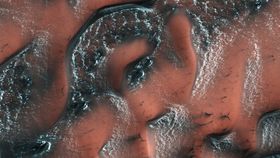
In fact, these sudden temperature changes often result in the formation of patchwork, carbon dioxide-based snow and ice dunes, as this gorgeous new photograph from NASA’s Mars Reconnaissance Orbiter beautifully depicts.
What you see here are regular sand dunes, formed by the Red Planet’s weak winds. Snow and ice have clearly been falling and forming at this high latitude in the Northern Hemisphere, and they’ve turned into frigid formations that trace the crests and troughs of the dunes.
During the spring, when temperatures jump up, the snow and ice sublimates quite dramatically. This surface turbulence shifts around the Martian sand grains, which permit darker sand to ooze out from below. This results in the beautiful pattern of rusty crimson, white, and shadow you can see here in this remarkable, otherworldly image.