Nature
 PUBLISHED


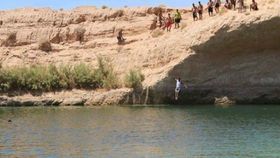


Siberia has suddenly appearing holes, but Tunisia seems to be getting the better end of the bargain – a lake that has arrived as if from nowhere in the middle of a hot dry summer.
The lake is just over a hectare in size and 10-18m deep. It is presumed that a small earthquake fractured a natural dam holding an artificial reservoir allowing the water to reach the surface. However, the aquifer has not been found – the theory relies more on the absence of other credible explanations than anything else.
Like the Siberian holes, the exact date of the lake's formation is not known, since this part of southern Tunisia is so sparsely populated the lake could have been there for weeks or months without being noticed. It came to the attention of local shepherds three weeks ago, but only hit the international media in the last few days.
Now that is has been found, people have flooded to what has been named Gafsa Beach to swim, despite warnings that the water has potentially poisonous algae in it, and may be radioactive from nearby phosphate mines. Phosphate deposits often occur in conjunction with uranium and thorium, which can be released into groundwater by mining. The color change from clear blue to murky green has not helped these fears.
The lake is not far north of the area where much of the original Star Wars was filmed, with a similar climate. While water is certainly not as scarce as on Tataouine (named after one of the nearby towns) Tunisia is experiencing a drought, making the usual desert conditions around the new lake particularly dry.