Space and Physics
 PUBLISHED


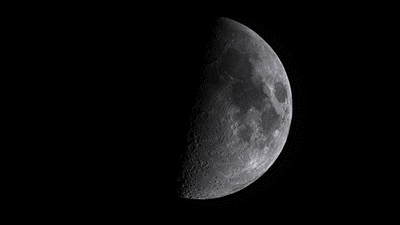


One of the most enduring uncertainties about the Moon − regarding its magnetism − has finally been solved, in a way that will probably make everybody happy.
We know our natural satellite used to be a lot more geologically active, especially in its early history. But what about its magnetic field? Researchers couldn’t reach a consensus; some supporting evidence suggested a strong field, similar to Earth's own, while modeling suggested the Moon could only ever have had a weak field. Strangely, both appear to have been right.
Rocks from the Apollo missions show there was strong magnetism on the Moon, but researchers now believe these rocks mark extremely rare increases in magnetic strength. As models have long suggested, the Moon generally had a weak magnetic field between 3.5 and 4 billion years ago. The strong magnetic field events were geologically brief.
“Our new study suggests that the Apollo samples are biased to extremely rare events that lasted a few thousand years – but up to now, these have been interpreted as representing 0.5 billion years of lunar history. It now seems that a sampling bias prevented us from realizing how short and rare these strong magnetism events were,” lead author Associate Professor Claire Nichols, from the University of Oxford, said in a statement.
Researchers found that rocks showing evidence of a strong magnetic field are all rich in titanium. The rocks associated with weak magnetism are all titanium-poor. They believe the melting of titanium-rich rocks deep beneath the Moon's surface led to a strong magnetic field and the enrichment of rocks where the evidence of magnetic fields is preserved. The team estimates that the strong-field intervals could have been as short as a few decades and certainly no longer than 5,000 years.
All the rocks collected by the astronauts were found in lunar maria, the dark basalt "seas" of the Moon that were formed by cooled lava. The Apollo missions landed there because they are reasonably flat, but their molten origin also means they are uncharacteristically rich in high-titanium rock.
“If we were aliens exploring the Earth, and had landed here just six times, we would probably have a similar sampling bias especially if we were selecting a flat surface to land on," coauthor Associate Professor Jon Wade, also at Oxford, added. "It was only by chance that the Apollo missions focussed so much on the Mare region of the Moon – if they landed somewhere else, we would likely have concluded that the Moon only ever had a weak magnetic field and missed this important part of early lunar history entirely.”
Previous work has suggested later spikes in magnetism, putting the blame on major impacts that shaking the Moon up. This scenario might have been responsible for later magnetic spikes, such as those suggested by the rocks collected by the Chinese lander Chang’e 6. Explorations by the Artemis program, which will take humans back to the Moon but to a very different area – the Lunar South Pole – will provide new insights into the geology that could confirm or deny this latest theory.
“We are now able to predict which types of samples will preserve which magnetic field strengths on the Moon. The upcoming Artemis missions offer us an opportunity to test this hypothesis and delve further into the history of the lunar magnetic field,” explained co-author Dr Simon Stephenson, also from Oxford University.
A paper describing the results was published in the journal Nature Geoscience.